
[ad_1]
A major UK study found that disrupted sleep patterns in patients hospitalized with COVID-19 were likely to be a factor in shortness of breath.
The study of patients at 38 institutions across the UK was conducted by the University of Manchester and Leicester, presented at the European Congress of Clinical Microbiology and Infectious Diseases (Copenhagen, April 15-18) and published in Lancet Respiratory Medicine.
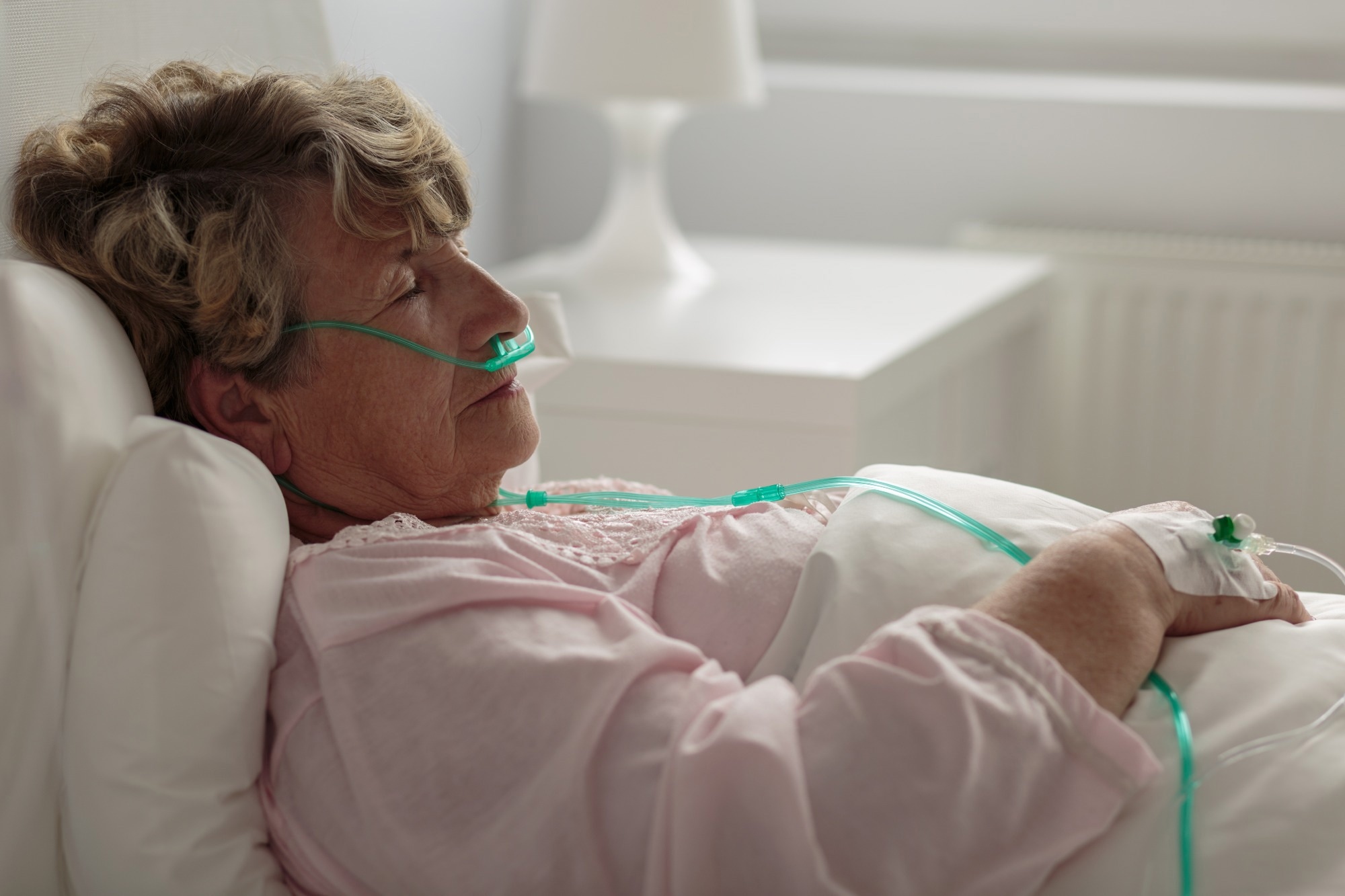 Study: Effects of sleep disturbance on dyspnoea and impaired lung function following hospitalization with COVID-19 in the UK: a prospective multicentre cohort study. Image Credit/Ground Photo/Shutterstock
The team found that 62% of participants who had been admitted to hospital with COVID-19 suffered from sleep disturbances, which probably persisted for at least 12 months and highlighted for the first time the association between two symptoms of the post-COVID state: shortness of breath and sleep disturbance.
On average, participants who had been hospitalized with COVID-19 slept more than an hour longer, but their sleep patterns were less regular (19% decrease on the sleep regularity scale) than matched participants who were hospitalized for any cause.
Study researchers also found that participants with sleep disturbances were more likely to suffer from anxiety and muscle weakness, common symptoms of the post-COVID-19 state.
Statistical analysis identified that sleep disturbances were likely to directly cause shortness of breath, but that reduced muscle function and increased anxiety, two known causes of shortness of breath, could partially influence the association. between sleep disturbances and shortness of breath.
The study authors believe that targeting sleep disturbances by reducing anxiety and improving muscle strength in these patients might alleviate shortness of breath, but more research is needed.
The study used extensive data from hospitals participating in the PHOSP-COVID study between March 2020 and October 2021.
PHOSP-COVID is a UK-wide consortium studying long-term health outcomes for patients hospitalized with COVID-19.
The study was funded by UK Research and Innovation and others.
Sleep quality was assessed using subjective measures self-reported by 638 patients to the researchers.
It was also objectively measured in 729 other patients who wore smartwatch-like devices that measured nighttime activity levels.
Both measures consistently revealed a higher prevalence of sleep disturbance among people hospitalized with COVID-19 compared to matched UK Biobank controls who had been hospitalized for any cause.
The impact on sleep of hospitalization due to COVID-19 was independent of ICU admission.
One of the authors, Dr John Blaikley, a clinician scientist from the University of Manchester and respiratory physician, said: “This study has found that sleep disturbance may be an important factor in post-COVID-19 shortness of breath – or dyspnea – due to its associations with reduced muscle function and anxiety.
“If so, interventions targeting poor sleep quality could be used to manage symptoms and recovery after COVID-19 hospitalization, potentially improving patient outcomes.”
First author and mathematician, Mr Callum Jackson from the University of Manchester, said: “Understanding the causes of shortness of breath is complex as it can result from conditions that affect the respiratory, neurological, cardiovascular and mental systems.
“These same systems are also affected by sleep disturbances, another frequently reported symptom after COVID-19.
“Our results suggest that sleep disturbance is a common problem after hospitalization for COVID-19 and is associated with shortness of breath.
“We also show that this is likely to persist for at least 12 months, as subjective sleep quality did not change between the 5- and 12-month follow-up visits.”
Professor Chris Brightling from the University of Leicester said: “The strengths of our study include its size, its multicentre nature and the use of different complementary assessment measures to assess sleep disturbance. Consistent clinical associations were also observed across each assessment method.
“Future research should now assess whether interventions targeting sleep disorders can improve not only sleep quality, but also shortness of breath by reducing anxiety and improving muscle strength.”
Sources:
Journal reference:
|
Sources 2/ https://www.news-medical.net/news/20230416/Disturbed-sleep-in-COVID-19-patients-linked-to-breathlessness-major-UK-study-finds.aspx The mention sources can contact us to remove/changing this article |
[ad_2]