
[ad_1]
 The measles outbreak that started in west Texas continues to spread, with cases occurring in 21 counties. The Texas Department of Public Health has reported 683 cases and two children, both unvaccinated, have died.
Health officials have confirmed two measles cases in Tarrant County, the first cases reported in the county this year. The two patients are “household members,” according to the announcement, and both are unvaccinated. One is a child and one is an adult.
Health officials have not yet determined where the two county residents caught the illness.
No cases have been reported at Cook Children’s Medical Centers in Fort Worth or Prosper. If you are worried your child has been exposed to measles, please read this article for guidance.
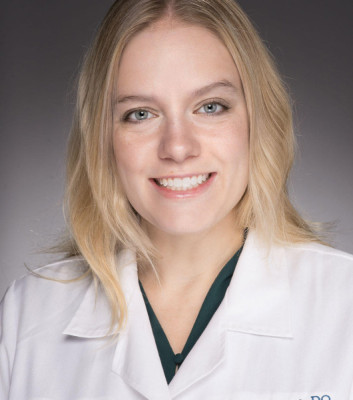
We know there is a lot of misinformation out there about measles and vaccines. We asked Laura Romano, D.O. a Cook Children’s hospitalist, to give us the facts.
Dr. Romano’s answers have been lightly edited for clarity and length.
Is it better to get measles and have natural immunity?
Dr. Romano: Absolutely not.
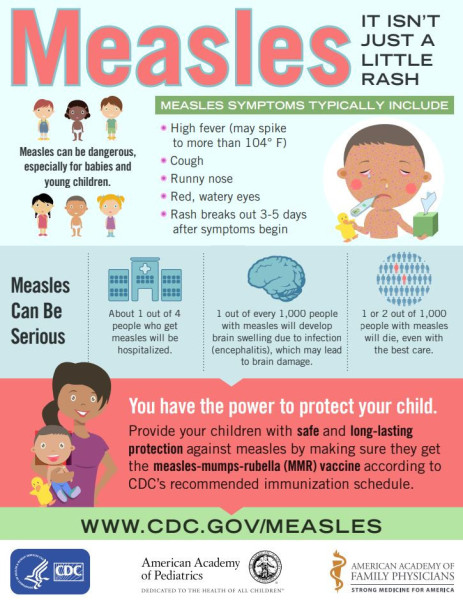
Measles can cause serious complications, even years after recovery. Kids can have brain damage, hearing loss and seizures. One out of every 1,000 kids with measles develops encephalitis, or brain swelling. Others can have seizures years down the road.
Measles can have devastating consequences for unvaccinated. As we’ve seen, it can cause death in unvaccinated people.
More info: For every 10,000 children who get measles, typically 2,000 will be hospitalized, 500 will get pneumonia, 10 will get encephalitis and 10 to 30 will die.
What about people who say measles is not that big of a deal?
Dr. Romano: Measles can be “not a big deal” for some people, but it is unnecessarily risky to not get vaccinated.
One in five children who get measles can get pneumonia. There’s a risk of encephalitis (brain swelling), seizures and brain damage.
Do you really want to take the risk that your child will be fine when we know that the vaccine is 97% effective at preventing those symptoms?
Recently, a second unvaccinated child passed away from measles pulmonary failure. This is a second preventable death.
More info:
Two children have died from measles in Texas as of April 30.
In the decade before the creation of the measles vaccine in 1963, measles killed 400 to 500 people. An additional 48,000 were hospitalized and 1,000 had encephalitis (swelling of the brain), according to the CDC. Across the globe, an estimated 107,500 people died from measles in 2023 alone, according to the World Health Organization. Most of the deaths were in unvaccinated or under vaccinated children under the age of 5.
 Does measles only infect kids?
Dr. Romano: No.
What we’re seeing is that anyone who is unvaxxed is susceptible. It is more common in children, but that doesn’t mean adults can’t get it. There was an adult who died in New Mexico after he had measles. (Health officials have yet to officially confirmed whether or not measles was the direct cause of death).
It is called a “child’s disease” because kids are most susceptible. But young adults or adults might be more at risk to measles now than in the last few decades. That’s because herd immunity is gone. There’s a chance we might see more cases in adults and young adults who are not vaccinated.
More info: As of April 4, the CDC reported 26% of measles cases in 2025 were among people over 20 years old.
Do you only need the first shot to be protected against measles?
Dr. Romano: No; you need both.
The first shot is 93% effective at preventing complications from measles and secondary infections. But the second dose bumps that prevention up to 97%. That second shot really is what makes sure you don’t have symptoms of it.
Does the vaccine fully prevent people from getting the measles?
Dr. Romano: No, but it prevents it 97% of the time.
If you’re had both vaccine doses, it is highly unlikely you will get the measles. However, just like vaccinations against COVID, there is a small chance you could still get measles, but it will be extremely mild. More importantly, you are less likely to spread it.
The measles virus is extremely smart. And it spreads before most people know they have it or are symptomatic. If you are vaxxed, you might spread to one other person. If you are unvaxxed, you’ll probably spread it to 15 to 20 people.
Does the MMR vaccine make children sick?
Dr. Romano: No, the vaccine does not make children sick.
The most common side effects of getting the shot are arm soreness and a mild fever, like many vaccines. The vaccine can also give a mild fever and rash. This is the body’s natural response to developing immunity and is not contagious.
Does the MMR vaccine, or other vaccines, cause autism?
Dr. Romano: No; there is no link between autism and the MMR vaccine or any vaccine.
There have been multiple credible studies that have shown there is absolutely no link between autism and any vaccine.
If you have questions about vaccines, you should talk to your child’s doctor. There is nothing wrong with parents who have questions and are willing to have a conversation with their providers about vaccinations.
More info: In 1998, a British Gastroenterologist published a paper claiming MMR vaccines cause autism. That paper has been retracted due to fraudulent methods and findings.
Countless studies have proved that there is no link between autism and vaccines.
Can Vitamin A prevent measles?
Dr. Romano: No.
While some people and even some members of the federal government have suggested that Vitamin A could be protective against measles, this is simply not true. Now kids are being hospitalized showing signs of too much Vitamin A. It is just giving frontline doctors another problem to address. Please do not take Vitamin A to prevent measles. It does not do anything.
Can vaccines hurt us because they contain dangerous chemicals and materials?
Dr. Romano: No.
Vaccines contain some materials that you probably would not want to eat in large quantities by themselves, like formaldehyde and aluminum. Some of these elements, like aluminum, are found in fruits and vegetables and are natural.
These elements are important to how the vaccine works: aluminum triggers the body’s immune response, and formaldehyde prevents bacteria from getting into the vaccine.
It’s like baking cookies. If you are baking cookies, you need things like baking soda and baking powder for them to turn out okay. If you ate an entire bag of baking powder, it would not be good for you. But you just need a tiny bit to make those cookies turn out okay. Vaccines are just like that. You need just a tiny amount to make the vaccine safe and effective.
More info: We consume aluminum all the time.
Aluminum is the third most abundant element on earth and is naturally found in fruits, vegetables, flour, dairy, nuts, honey and other food. We all typically eat about 7 to 9 milligrams of aluminum per day.
Babies consume aluminum in formula and breast milk. In their first six months of life, babies typically get 7 to 38 milligrams of aluminum through formula or breast milk. In comparison, during the first six months, infants typically get about 4 milligrams of aluminum from vaccines. That amount is safe.
Similarly, the amount of formaldehyde in a vaccine is not harmful. Our bodies naturally produce formaldehyde to help with metabolism. There is about ten times more formaldehyde naturally occurring in a baby’s body than the amount found in any vaccine.
 Doesn’t getting vaccinated only impact my children and I?
Dr. Romano: No; vaccinations protect everyone.
You need to get your kids vaccinated because it’s not just for your kid. It’s for your neighbor who is on chemotherapy and is now immunocompromised (meaning their immune system does not work). It’s for your kids’ classmate who has a baby sibling who can’t be vaccinated yet.
Or for people like my dad, who is on immunomodulators (a type of medicine) for rheumatoid arthritis. The medicine weakens his immune system.
That is who my kids and I get vaccinated for; for my neighbors, for my kids’ classmates, for my patients. We get vaccinated because we care about others and we care about our community.
I vaccinate my children because I care about the health of my community. I encourage vaccines not because of my potential political, religious, ethical, or moral beliefs; I encourage vaccines because I care about the safety of my community.
Main takeaway from Dr. Romano: If you have questions about vaccines, don’t go to your favorite social media wellness influencer. Please come to us – your pediatrician or your family physician. We want to have that conversation with you. Even if you disagree with us at the end of the day, that is ok.
As a pediatrician, we want what’s best for you and your family and sometimes that’s not what can be found on social media.
Here are a few resources and tips for finding a place to take your child for immunizations:
- Check with your child’s doctor. Ask which vaccines are due and make an appointment. If your child needs a doctor, see our locations or call 211 for help.
- Visit a public health vaccine clinic. Anyone from any county can call Tarrant County Public Health at 817-248-6299 to make an appointment or to find a walk-in clinic.
- Check with your local school district for vaccine events.
- Enter your zip code at Vaccines.gov to find other options.
‘;
|
Sources 2/ https://www.checkupnewsroom.com/measles-mythbusting-with-laura-romano-do/ The mention sources can contact us to remove/changing this article |
[ad_2]