
[ad_1]
If you or someone in your household is allergic to sesame, an important change is happening to help you quickly identify foods that contain sesame. From January 1, 2023, sesame must be labeled as an allergen on packaged foods, including dietary supplements.
Sesame joins eight other foods already listed as major food allergens by federal law. The nine main food allergens are:
- milk
- Eggs
- fish, such as perch, flounder, cod
- Shellfish, such as crab, lobster, shrimp
- tree nuts, such as almonds, walnuts, pecans
- peanuts
- wheat
- soy beans
- sesame
Be careful during the sesame labeling transition period
Although the requirement for sesame to be labeled as an allergen is effective January 1, 2023, you may still find food products for sale that do not list sesame as an allergen on the label.
The law establishing this sesame labeling does not require foods that were already on their way to the store or in stock before 2023 to list sesame as an allergen on the label. Therefore, these food products do not need to be withdrawn from the market or relabeled for sesame to be declared an allergen.
Because some packaged foods can have long shelf lives, it’s hard to say when pre-2023 stock will be replaced by foods with the required labels. So proceed with caution during this transitional period.
Also keep in mind that the ingredients of a food product can change at any time, so it’s a good idea to check the label every time you buy the food product even if you have eaten it before and have not had an allergic reaction.
To learn more about the use of sesame in a food product, the U.S. Food and Drug Administration, which is responsible for enforcing labeling requirements, recommends that you contact the manufacturer or distributor listed on the food product’s label mention.
Examples of new sesame labeling
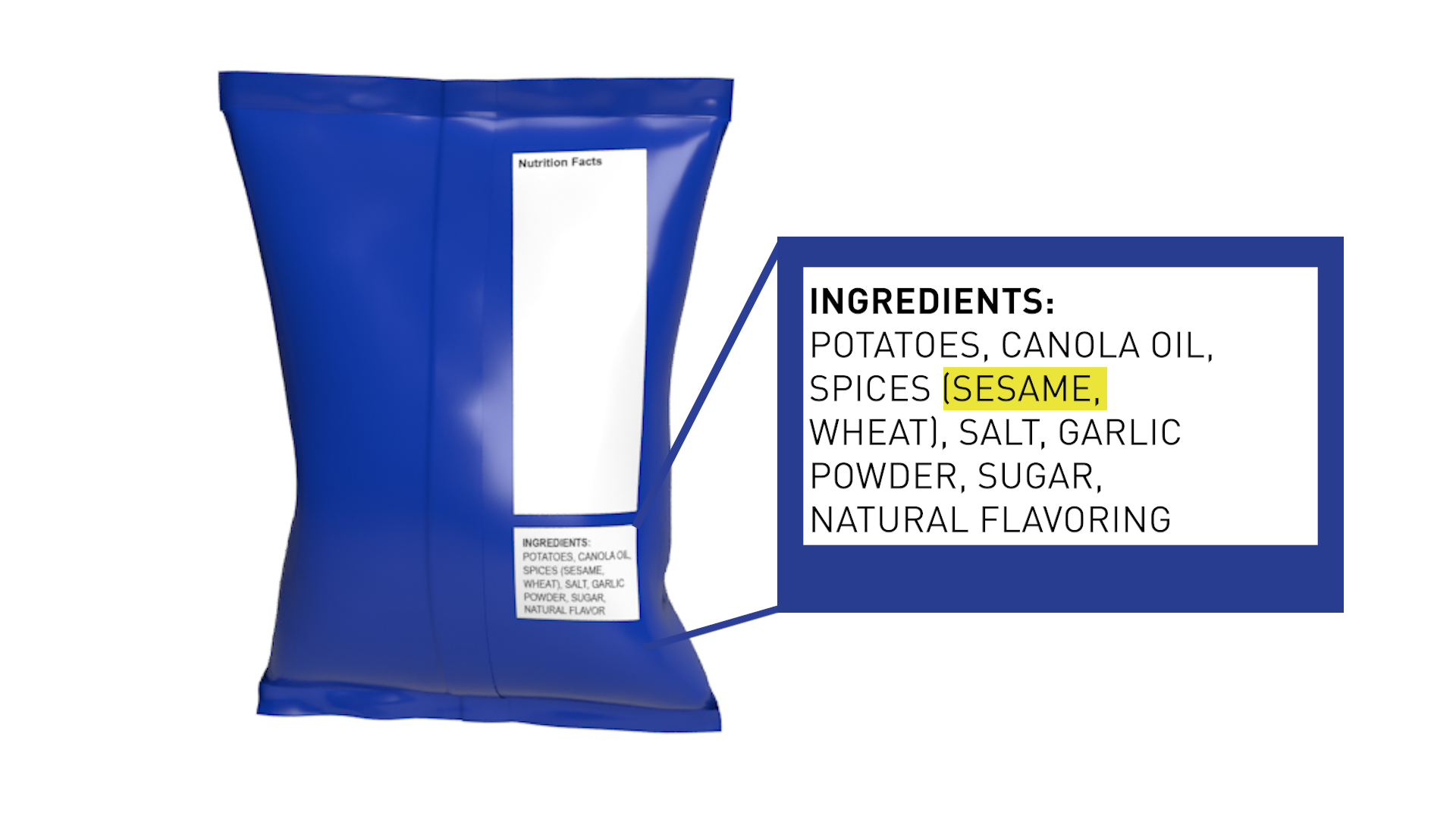
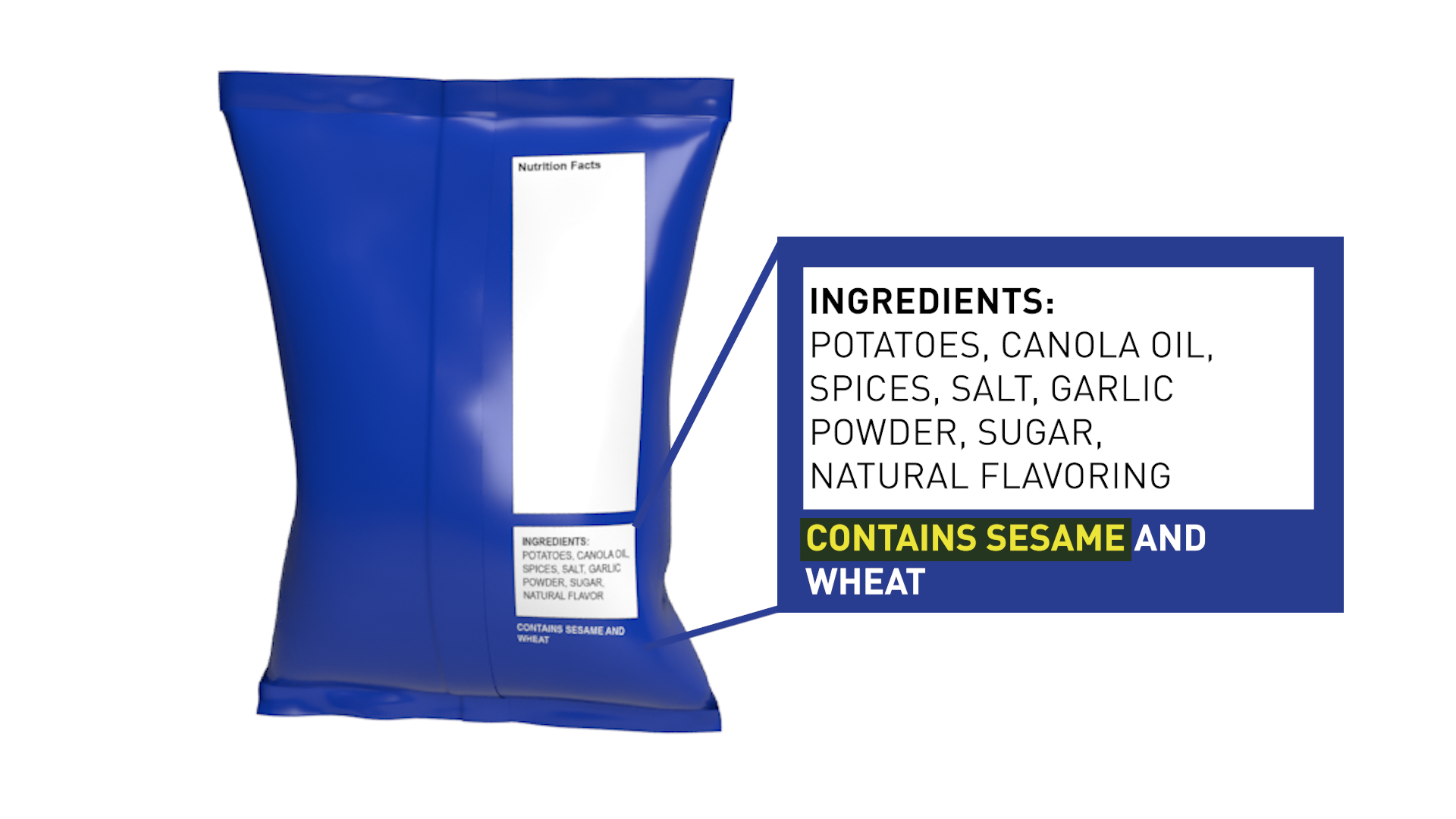
This is what the new sesame labeling could look like.
The name of the food source of a major food allergen should appear:
In parentheses after the name of the ingredient.
Examples: lecithin (soy), flour (wheat), natural flavor (sesame), and spices (sesame)
OR
Immediately after or next to the list of ingredients in a Contains statement.
Example: Contains sesame.
Sesame has always been required to be listed in the ingredient statement if it was an added ingredient, with a few exceptions. That goes for every added ingredient. Now that sesame is a major food allergen, the FDA expects it to be specifically listed as sesame on the label if it’s part of another ingredient, such as natural flavor or spice mix.
Additionally, if a food package has a Contains statement and has sesame as an ingredient, sesame must now be included in that Contains statement. This gives consumers more information about which products contain sesame as an ingredient.
Sesame labeling requirements apply to packaged foods. Allergen labeling requirements for non-packaged foods can vary, such as bagels in a grocery box or bakery items displayed on trays. If you are concerned about those products, you can ask the store staff for information about food allergens.
Why did sesame become a major food allergen?
Sesame became the ninth leading food allergen through the Food Allergy Safety, Treatment, Education, and Research (FASTER) Act, a federal law passed in 2021. The other eight top food allergens were defined by a federal law passed in 2004.
While many types of food can cause allergies, federal laws focus on the most common and require food labels to identify the food source of a major food allergen using its common or common name on the label.
The top nine food allergens cause the most serious food allergies in the US
Additional Resources
|
Sources 2/ https://www.fda.gov/consumers/consumer-updates/allergic-sesame-food-labels-now-must-list-sesame-allergen The mention sources can contact us to remove/changing this article |
[ad_2]