
[ad_1]
A seven-year-old Californian boy has died after being infected with a “brain-eating amoeba”, according to his family.
“We are sad and heartbroken to announce that our adorable baby boy has passed away,” the family wrote on a GoFundMe page. “He is now in the loving arms of our Lord and the members of his family who came before him. We rejoice to know that he is no longer in pain and that he is well cared for.”
The Tehama County Health Services Agency said in a statement the boy had been diagnosed with an “extremely rare” infection known as primary amoebic meningoencephalitis (PAM).
Tests carried out by the California Department of Public Health and specialized laboratories indicated that the boy had been infected with Naegleria fowleri—A single-celled organism commonly found in warm fresh waters, such as lakes, rivers and ponds, as well as in geothermal water and soil.
Infections with this amoeba can cause PAM, a “rare and devastating infection” of the brain, according to the Centers for Disease Control and Prevention (CDC).
The disease destroys brain tissue – hence the nickname “brain eater” – causing brain swelling and, in most cases, death.
Between 2010 and 2019, only 34 Naegleria fowleri infections have been reported in the United States, according to CDC figures.
The death rate for Naegleria fowleri infections is 97 percent, according to the CDC. In fact, only four of 148 known infected people in the United States between 1962 and 2019 eventually survived.
The first symptoms of PAM, which appear between one and nine days after infection, include stiff neck, confusion, lack of attention to the environment, loss of balance, seizures and hallucinations. .
After the onset of symptoms, the disease progresses rapidly, usually resulting in death between one and 12 days after onset.
Risk of infection in lakes and rivers
Naegleria fowleri can only occur when water contaminated with amoeba enters an individual’s nose. In the vast majority of cases, this happens when people swim or dive in warm freshwater bodies, such as lakes and rivers.
In very rare cases, people have been infected from other sources, for example when insufficiently chlorinated swimming pool water or contaminated tap water entered the nose. You cannot get infected by drinking water contaminated with amoeba.
Tehama County health officials said the most likely source of infection for this child was swimming in an unidentified freshwater lake in the county on July 30. Only 10 cases of Naegleria fowleri infections have been reported in California since 1971.
Although infections with this amoeba are extremely rare, the Tehama County Health Services Agency said there are a number of preventative measures people can take, including:
- Swim in a pool rather than untreated bodies of water like lakes and rivers.
- Hold your nose or use nose clips when participating in water activities.
- Avoid submerging your head in hot springs and other hot bodies of fresh water.
- Avoid water-related activities in all warm freshwater bodies during periods of high temperatures.
- Avoid digging or stirring up mud and scum while participating in water-related activities in warm, shallow freshwater areas.
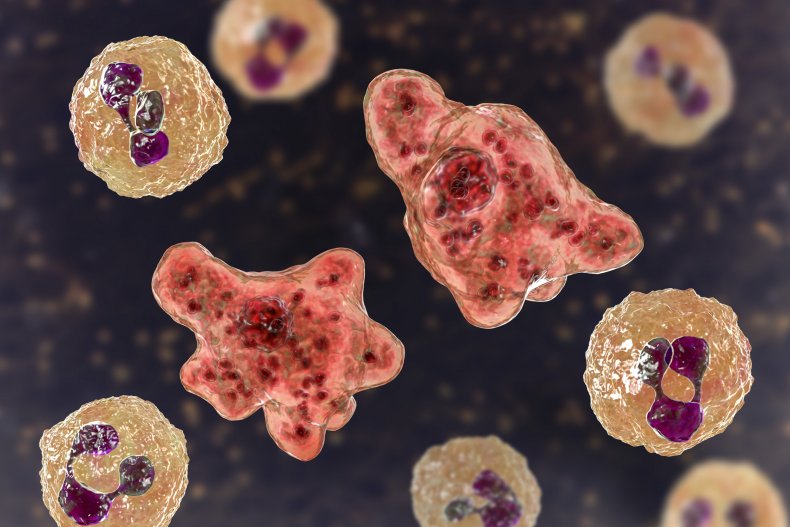
iStock
|
Sources 2/ https://www.newsweek.com/boy-seven-dies-rare-brain-eating-amoeba-naegleria-fowleri-california-lake-1619190 The mention sources can contact us to remove/changing this article |
[ad_2]