
[ad_1]
If you find yourself throwing more plant-based foods or whole foods – foods derived from a plant – into your shopping cart, you’re not alone. Current data shows that the plant food industry is now a $ 7 billion market, according to statistics from the Association of plant-based foods.
In fact, more than 71 million US households, or 57% of all US households, purchased herbal groceries in 2020, a 4% increase from the previous year.
Meals based on animal-free and minimally processed foods: fruits, vegetables, whole grains, legumes (beans and legumes), nuts, seeds, spices and oils — have been linked to a multitude of health benefits. And now, the American Heart Association (AHA) recently published two research studies that provide additional evidence for enjoying more meatless dishes.
Here are four reasons why you might want to consider adding vegetarian / vegan / flexitarian / Mediterranean / plant-based specialties to your meal plan, and for even more healthy eating tips, be sure to view our list of The best and worst foods to eat on a plant-based diet.
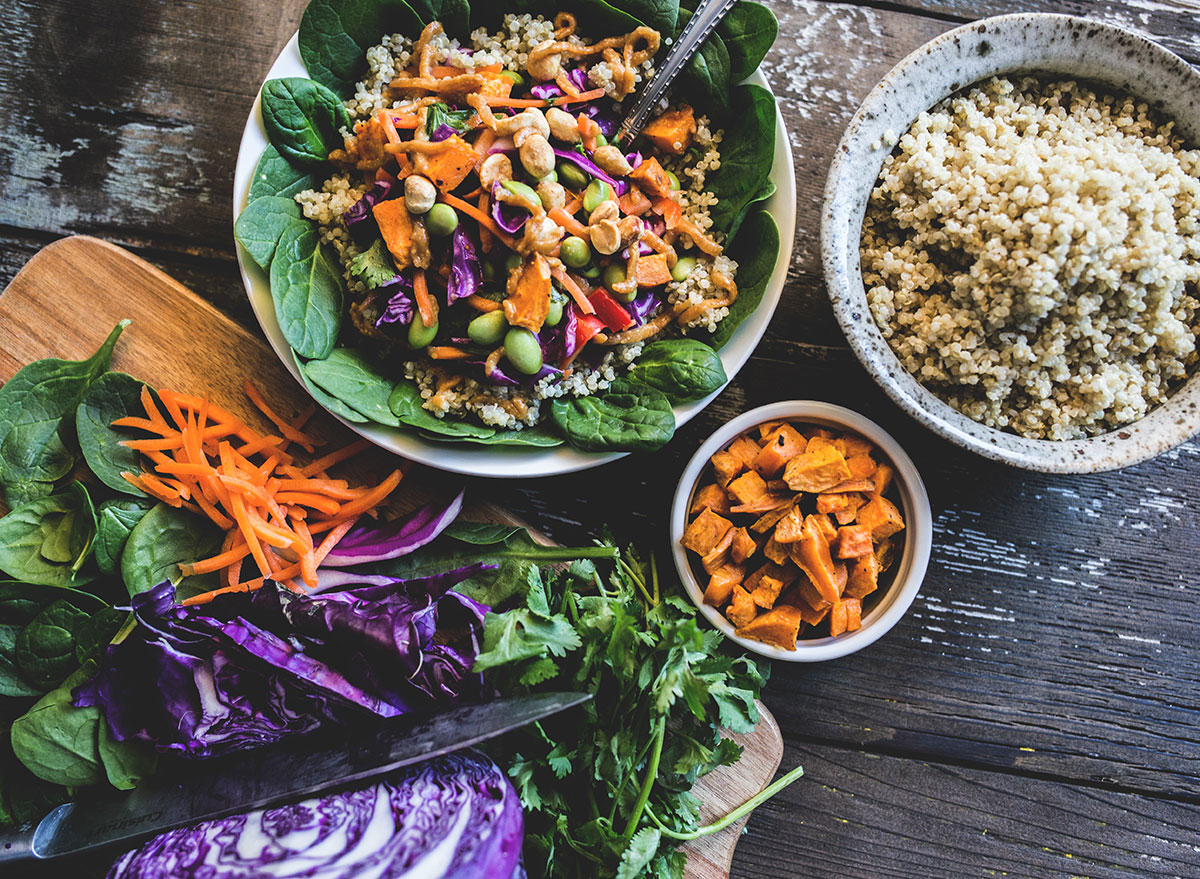
Adopting an herbal lifestyle today can keep your heart healthy later. One of the studies published in the Journal of the American Heart Association tracked the eating habits of 4,946 adults aged 18-30 over a 32-year period. Participants were asked to present their detailed food history as the authors rated their food choices on a scale. Beneficial foods (fruits, vegetables, beans, nuts, and whole grains) scored highest, while junk foods (high-fat red meat, fried foods, salty snacks, pastries, and soft drinks) scored highest. weak.
After taking into account other risk factors (such as genetics, smoking, and exercise habits), volunteers who scored in the top 20% on the long-term diet scale had 52 % lower chance of suffering from cardiovascular disease three decades later. . Additionally, adults who changed their food choices for the better between years 7 and 20 of the study were 61% less likely to be diagnosed with subsequent cardiovascular disease compared to participants who switched to more harmful foods. .
“I’m not surprised that consuming more plant-based foods is beneficial for cardiovascular health,” says Erin Palinski-Wade, Dt.t., certified specialist in diabetes care and education and author of 2 day diabetes diet. She explains that a plant-based diet not only means your meals will be low in saturated fat that induces inflammation, but also increases your intake of antioxidants, as well as fiber.
“A diet rich in antioxidants can calm inflammation, a factor in chronic disease,” she continues. “Additionally, high fiber diets have been shown to have a positive impact on blood lipids and gut health, which may, in turn, reduce the risk of future cardiovascular disease.”
Also consult Beer consumption has a major effect on heart disease, according to a new study.
The second AHA study involved 123,330 postmenopausal women aged 50 to 79 who were not living with heart disease. Women have completed food questionnaires over the past 15 years, where the authors have obtained scores based on their degree of adherence to the Wallet Diet, a plan designed to cholesterol-lowering plant foods (including plant proteins like soy, beans, and tofu, and soluble fiber foods like oats, barley, okra, eggplant, apples, and berries).
The results, which were published in the Journal of the American Heart Association, reported that women who followed the Portfolio diet frequently were 17% less likely to develop heart failure, 14% less likely to develop coronary heart disease, and 11% less likely to develop any type of cardiovascular disease.
“We also found a dose response in our study, which means you can start small, adding one component of the Portfolio diet at a time, and see more heart health benefits as you add more. components, “said Andrea J. Glenn, MSc, RD, lead author of the study and doctoral student at the University of Toronto. in a press release.

Last month, the American Academy of Neurology announced that even minimal servings of colorful plant-based foods, including strawberries, blackberries, and oranges-may have the ability to reduce the risk of cognitive decline by 20%.
Thanks to certain types of flavonoids (a class of plant compounds that offer powerful antioxidant effects), cognitive impairment was reduced by 24% (seen in those who ate more red, purple, and blue foods, such as cherries and blueberries) and 38%. % —Which is equivalent to being three to four years younger than your actual age — among volunteers who ate orange and yellow fruits and vegetables.
“The people in our study who did best over time ate an average of at least half a serving per day of foods such as orange juice, oranges, peppers, celery, grapefruit, grapefruit juice, apples and pears, ”said study author Walter Willett, MD, DrPH, professor of epidemiology and nutrition at Harvard, in a press release. “And it’s never too late to start because we’ve seen these protective relationships if people were consuming flavonoids in their diets 20 years ago, or if they started incorporating them more recently.”
Researchers in the UK analyzed data from 11 clinical trials (each study lasted an average of 23 weeks) that looked at the results of following a plant-based diet compared to other diets. According to their findings, published in the journal BMJ Open Diabetes Research & Care, a plant-based (or sometimes vegan) diet had both physical and psychological benefits for people with type 2 diabetes.
For example, fasting blood sugar “fell more sharply” in participants who ate little or no animal products while their symptoms of depression “improved dramatically.”
“These results make a lot of sense,” says Palinski-Wade. “If you have high blood sugar, a plant-based diet can have a positive impact on good health. The reason: Many plant foods (such as onions, garlic, leeks, asparagus and bananas) are loaded with prebiotic fiber, a form of dietary fiber that feeds the “friendly” bacteria that reside in the digestive system.
“The metabolism of these compounds releases beneficial short-chain fatty acids, which reduce inflammation, while improving insulin sensitivity, which ultimately improves blood sugar,” she explains.
And therefore, avoiding fluctuations in high and low blood sugar will also help you control your emotions. “Since blood sugar regulation and gut health can have a direct impact on mood, a diet that balances blood sugar can also lead to improvements in mood,” adds Palinski-Wade.
Get even more health tips straight to your inbox by subscribe to our newsletter!
|
Sources 2/ https://www.eatthis.com/news-surprising-effects-eating-plant-based-foods/ The mention sources can contact us to remove/changing this article |
[ad_2]