
[ad_1]
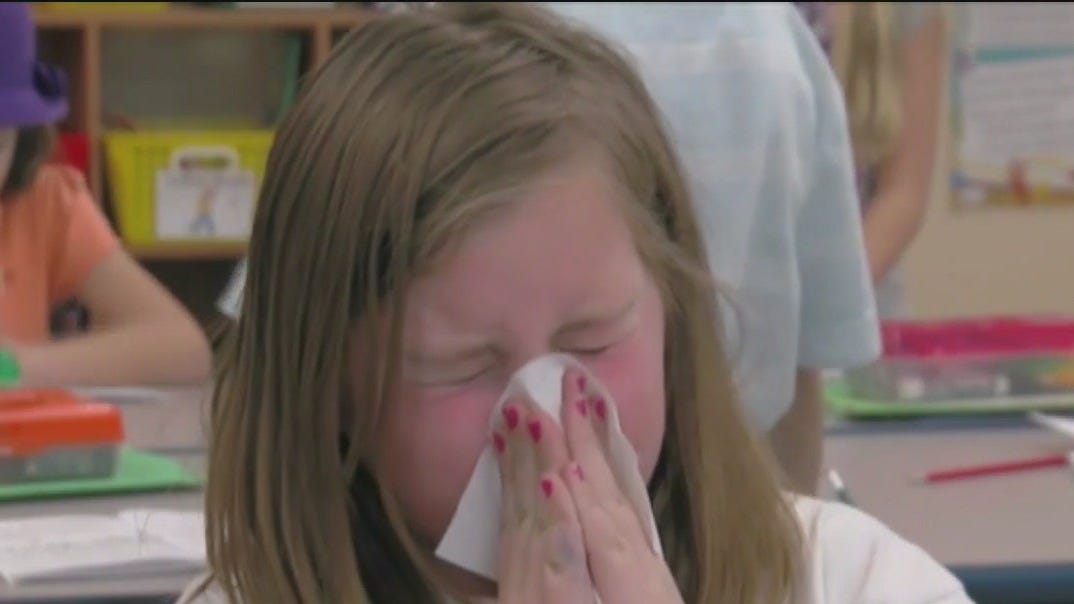

U.S. faces COVID-19 surge ahead of schools reopening
Several states across the country have experienced a rise in COVID-19 cases over the summer before children head back to school.
Fox – 32 Chicago
New variants of COVID are nothing new, but one of the newer FLiRT strains is surging as students head back to school.
FLiRT has been detected in wastewater surveillance data, according to data from the Centers for Disease Control and Prevention. The new strains are subvariants of Omicron.
The newest variant, KP.3.1.1, is the predominant and only major variant increasing in proportion nationally, according to the CDC, which reports it made up about 40% of the cases in the United States between August 3 through August 17.
SARS-CoV-2, the virus that causes COVID-19, is ever-changing with mutations in its genetic code leading to the different variants over time.
The CDC tracks the prevalence through markers such as test positivity rates, emergency department visits and hospitalizations which remain high, particularly among adults over 65 years of age and children under 2 years of age.
All of these markers indicate the COVID KP.3.1.1 variant is spreading and rising.
Here’s what you need to know.
How contagious is the new COVID variant?
The period of most contagiousness for COVID is generally up to 10 days after the onset of symptoms, but it can vary depending on severity of symptoms or differing immune systems, per the National Health Service.
People experiencing mild COVID symptoms can be contagious for approximately five to seven days, whereas those with more severe symptoms or those with a weakened or compromised immune system can be contagious for up to 20 days.
COVID KP.3.1.1 variant symptoms
- Fever or chills
- Cough
- Sore throat
- Congestion or runny nose
- Headache
- Muscle aches
- Difficulty breathing
- Fatigue
- New loss of taste or smell
- “Brain fog” (feeling less wakeful and aware)
- Gastrointestinal symptoms (upset stomach, mild diarrhea, vomiting)
While the symptoms can be mild for those who gained immunity from prior infection or vaccination, many people are at higher risk of becoming very ill.
Symptoms may appear within 2-14 days after exposure.
Covid quarantine rules
In March, the CDC updated its COVID-19 guidance so people who test positive for the virus will no longer be directed to isolate at home for five days.
Health officials announced a new policy focusing on actions people can take to reduce spreading a variety of common respiratory viruses, such as influenza, respiratory syncytial virus (RSV) and COVID-19. Those actions include staying home when sick, staying up to date with vaccines, practicing good hygiene and improving indoor air quality.
Post-isolating includes taking more steps for cleaner air, such as opening windows or through the use of HEPA air filtration units, enhancing hygiene practices, wearing a well-fitting mask, and keeping a distance from others according to the CDC.
Are vaccines still necessary?
The CDC recommends COVID-19 vaccines for all people over the age of 6 months to protect against serious illness.
Updated vaccines that can provide protection during the 2024-2025 season will be available in the fall.
|
Sources 2/ https://www.northjersey.com/story/news/health/2024/08/20/how-long-does-covid-last-latest-strain-still-growing/74870407007/ The mention sources can contact us to remove/changing this article |
[ad_2]