
[ad_1]
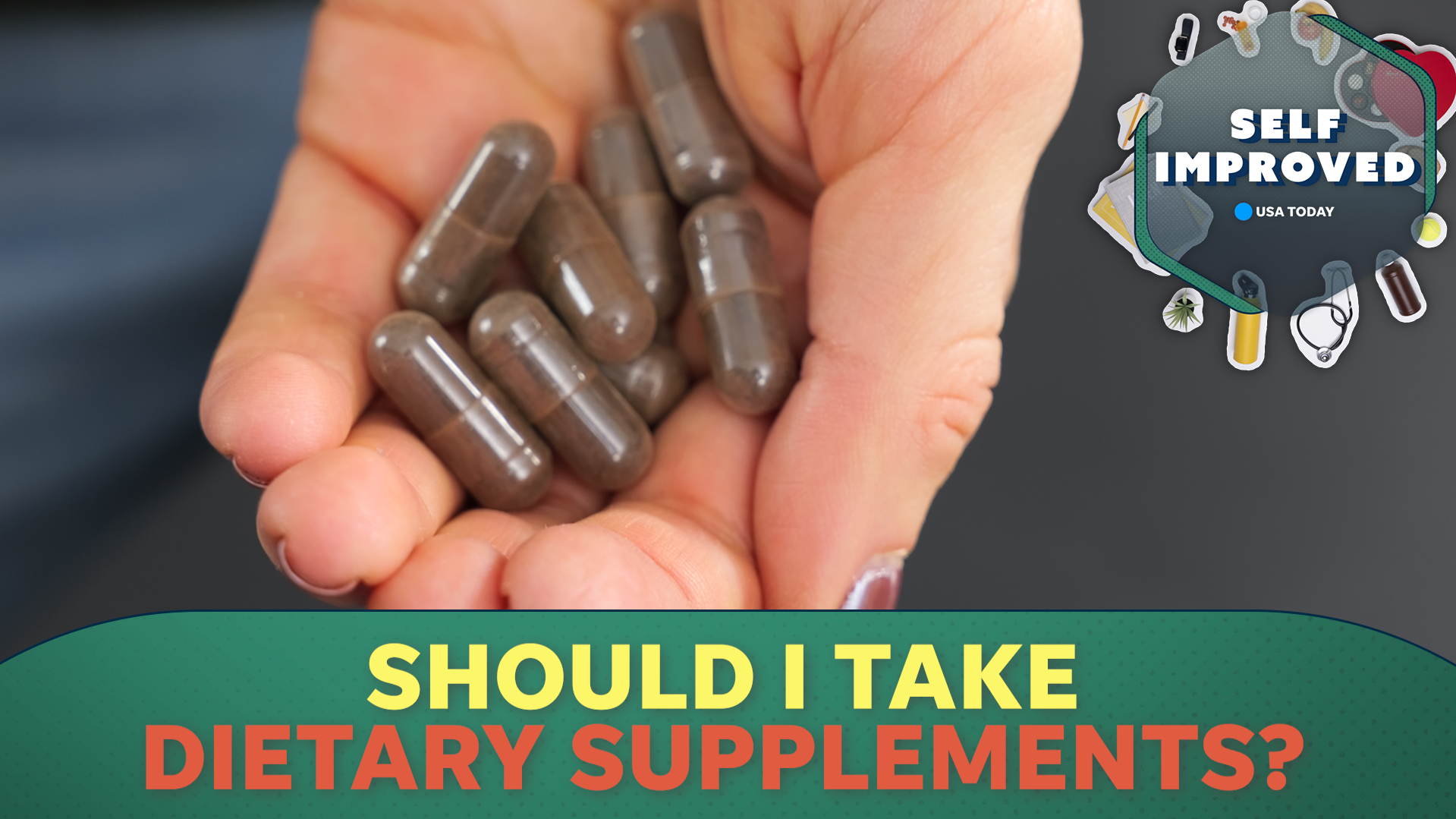

Dietitian reveals which supplements to add to your diet
Registered dietitian Abbey Sharp explains how to best benefit from taking dietary supplements if you’re thinking about adding them to your routine.
I frequently receive inquires about various supplements, and there’s a lot to weigh before you decide if supplements are right for you.
Can you get all the nutrients you require in your diet? The answer is yes and no. Yes, if you are careful about what you eat and seek foods that address your nutrient needs rather than only choosing foods that appease your taste buds. Unfortunately, healthful eaters are a tiny minority in this country, as our diets focus mainly on ultra-processed garbage that is anything but healthful.
Between the two extremes, there are those who consider themselves “health conscious” despite their bad diet, and to compensate, they load up on supplements.
Unfortunately, the issue of supplements is complicated. For example, does the supplement do what it claims to do? Admittedly with the huge advertising budgets associated with popular supplements, it’s easy to get sucked into believing they work. But I wonder, did the folks on TV touting wonderful effects they received from supplement X, Y, or Z, really benefit as much as they claim? I’m not suggesting they are not telling the truth, but what they experienced could be a placebo effect. This means the mind can trick you into believing something is working if you really want it to work, at least for a while, especially if it’s expensive, even though nothing of value is happening.
So, how can you decide if supplements are right for you?
Are there different types of dietary supplements?
Now, with this said, many medical and nutritional experts support dietary supplements. However, I need to make the distinction between what I refer to as “basic supplements” that contain vitamins, minerals, antioxidants, and coenzymes, versus “highly specialized supplements” that claim to address specific health problems.
When it comes to “basic supplements” there is supporting scientific evidence. For example, pregnant women often need iron supplements and folic acid (a B vitamin). Vitamin D, which can be hard to get in the diet, is a recommended supplement that is important for the absorption of calcium in bones. Vitamin B12 is found only in animal products, which means vegans may need a supplement to promote the health of nerve and blood cells. Vitamins C and E are antioxidants, as is coenzyme Q 10 (CoQ10) which protect cells from damage.
To capsulize my thinking on “basic supplements,” if we assume they are not harmful when consumed responsibly, they are not expensive, and they cover some basic dietary needs, an argument can be made that “what do you have to lose?” As for me personally, I take vitamin/mineral supplements daily, mostly as insurance that in case my diet is lacking in some areas, those needs will be covered.
The area between “basic” versus “highly specialized” supplements is populated with a vast array of botanicals and herbs like echinacea believed to bolster immune health, and turmeric, a spice that acts as an anti-inflammatory. There is scientific evidence that supports some helpful effects from taking echinacea and turmeric, and they have been used throughout history. A key is these are not expensive items, plus there is some scientific support, unlike expensive “highly specialized” supplements that have little or no scientific support.
Let me add, a supplement cannot claim to diagnose, treat, cure, or prevent diseases, because only prescription drugs can legally make such claims. Even so, some advertisements for “highly specialized” supplements seem to come close to crossing this line. But as long as they don’t technically cross that line, TV ads can make very strong claims whether there is supporting evidence or not.
What to know about ‘specialized’ supplements
I regularly receive questions about three “highly specialized” supplements — SuperBeets, Balance of Nature, and Prevagen.
Let’s look at each supplement:
What to know about SuperBeets
We know they are high in nitrates which contribute to nitric oxide, a chemical released from the inner lining of arteries that promotes vasodilation. This means the diameter of the vessel expands, reducing resistance to flow, which should lower pressure in the artery. However, it takes a leap of faith that these nitrates necessarily translate to increased nitric oxide production (the “logical connection”), and if so, is it enough to lower blood pressure? And what about claims that folks feel highly energized. Could it be a placebo effect as described above?
What to know about Balance of Nature
As for Balance of Nature, since the average American gets only about half the minimal goal of five servings of fruits and vegetables daily, Balance of Nature seems like an easy fix because it’s easier to take a pill. But then, as the old saying, “if it seems to good to be true…” Can you assume Balance of Nature is “just as good as loading up on fruits and vegetables.” Unlikely, but there may be some benefit.
What to know about Prevagen
Scientific evidence strongly supports regular exercise as the best medicine for your brain. Not only does it challenge the brain and keep it sharp by accomplishing many highly coordinated neurophysiological actions instantaneously while shifting constantly back and forth between the right and left brain, it increases blood flow and oxygenation to the brain. Since the vast majority of Americans, especially aging Americans, refuse to exercise, Prevegen seems like an attractive alternative, supplying a synthetic version of a specialized protein found in jellyfish that is claimed to promote memory.
But, does it? What’s the proof?
If these supplements were not expensive, it would be reasonable to conclude, “what do you have to lose?” But they are not inexpensive and results are “iffy.” Therefore, as a last resort, let me suggest adding fruits and vegetables to your diet and taking a good brisk walk each day. These actions have tons of scientific evidence backing them up.
Reach Bryant Stamford, a professor of kinesiology and integrative physiology at Hanover College, at [email protected].
|
Sources 2/ https://www.courier-journal.com/story/life/wellness/health/2024/10/31/should-you-take-dietary-supplements-heres-what-to-know/75274746007/ The mention sources can contact us to remove/changing this article |
[ad_2]