
[ad_1]
ROCKFORD, Ill. (WIFR) – As a way to save lives during National Stroke Awareness Month, health experts share the importance of recognizing the signs and symptoms of strokes.
According to the Centers for Disease Control and Prevention, nearly 800,000 people in the U.S. suffer a stroke each year. Of those, more than 600,000 are first-time or new strokes. While the risk increases with age, strokes can happen at any age.
“Increasing awareness is really helpful in communities because it allows us to appropriately reach folks and make a big difference for them when they are having a stroke,” OSF Saint Anthony Medical Center stroke neurology neurointerventionalist Dr. Ayman Gaith said.
Dr. Gaith says it’s important to follow the acronym “BE FAST.” It stands for balance issues, eyes, face drooping, arm weakness, speech difficulty, and” T” for time to call 911.
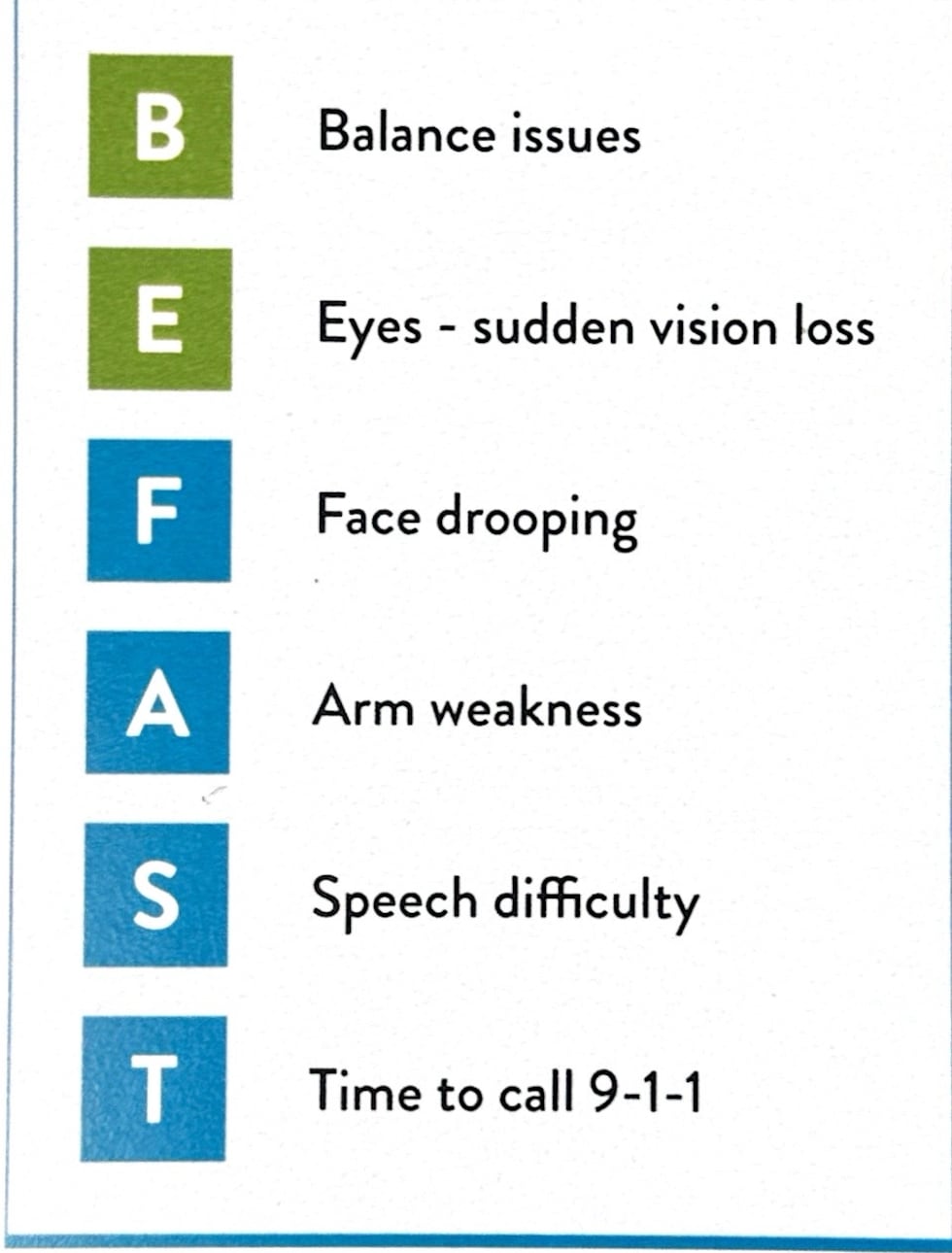
“I remember one particular story of – I think she was in third grade or fourth grade who learned that acronym, that ‘Be Fast’ acronym and recognized a stroke in her grandmother that was babysitting her,” said Dr. Gaith.
Doctors describe strokes as brain attacks.

There are two different kinds of strokes:
- Ischemic strokes are caused by a lack of blood flow because of a clot blocking vessels. They are the most common type of stroke.
- Hemorrhagic strokes occur when a blood vessel in the brain ruptures, causing bleeding.
There is no way to tell which one is happening unless the person experiencing symptoms gets to the hospital as soon as possible.
”Every minute that goes on, that brain is getting permanently damaged. The brain doesn’t heal like the rest of the body,” said Dr. Vibhav Bansal, Neurointervention Medical Director at Mercyhealth Javon Bea Hospital.
The CDC reports that in the U.S., someone has a stroke every 40 seconds, and someone dies from a stroke every 3 minutes and 11 seconds. About 185,000 strokes—nearly 1 in 4—happen in people who have already had one.
Strokes are also the leading cause of long-term disability in the U.S., according to Dr. Bansal.
He says it’s important to look at the changes you can make to reduce your risk of having a stroke, like eating a healthy diet, exercising regularly and not smoking.
“Diet and exercise are always critically important to being healthy, first and foremost lower your risk of having a stroke,” said Dr. Bansal.
Other risk factors include age, genetics and medical conditions such as diabetes and high blood pressure.
Dr. Gaith says strokes impact families as well and having support systems is important.
According to the American Stroke Association, a support group is available for stroke survivors and their families or caregivers.
The Rockford/Stateline Stroke Support Group meets from 4:30 to 6 p.m. on the last Tuesday of every month. An Aphasia Support Group in Rockford also meets from 4 to 5:30 p.m. on the second Tuesday of each month.
Both support groups are held at the Van Matre Encompass Health Rehabilitation Institute, 950 S. Mulford Rd, Rockford.
Copyright 2025 WIFR. All rights reserved.
|
Sources 2/ https://www.wifr.com/2025/05/12/time-is-brain-rockford-doctors-share-how-spotting-stroke-symptoms-saves-lives/ The mention sources can contact us to remove/changing this article |
[ad_2]