
[ad_1]
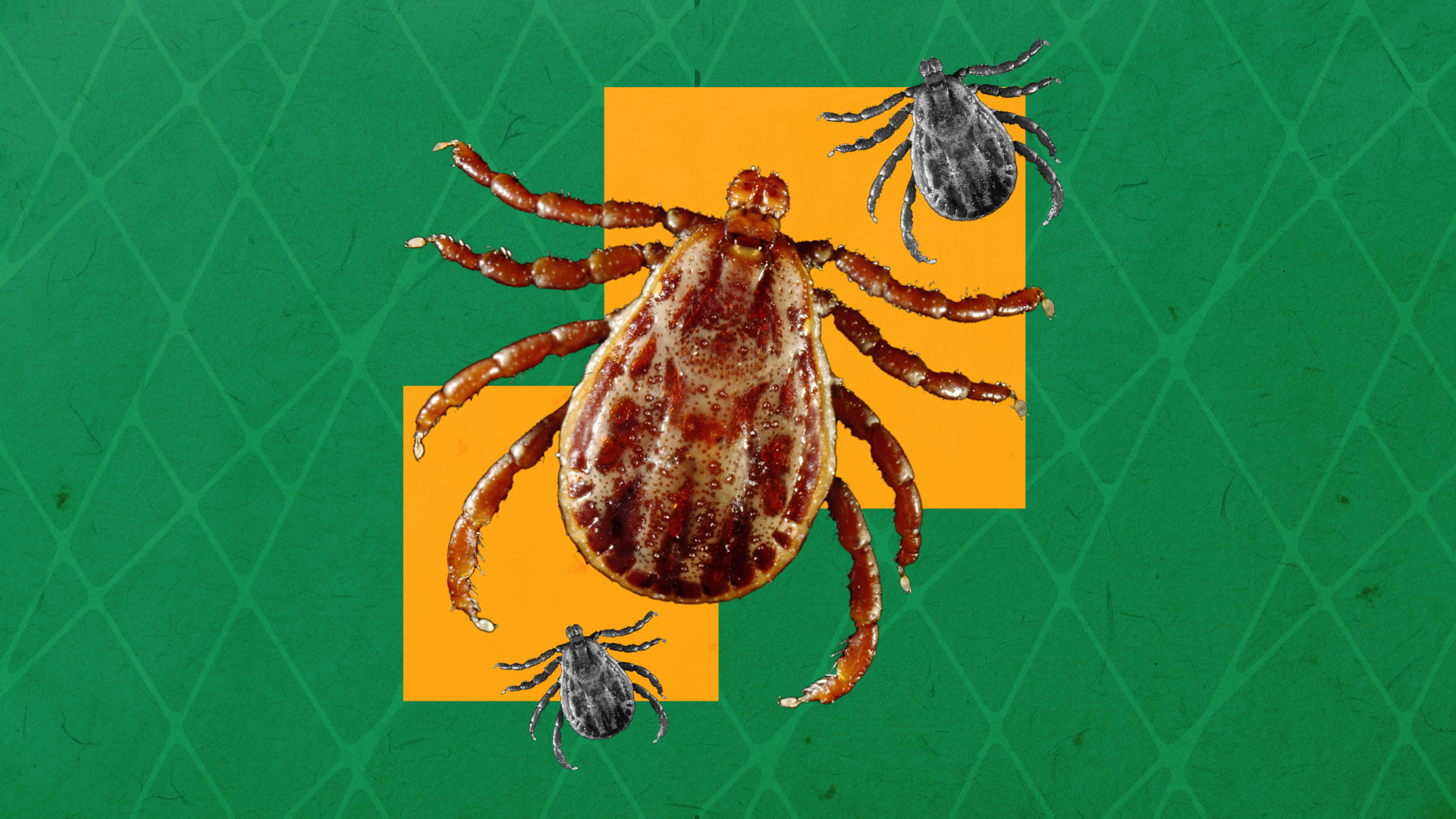

Are you risking Lyme disease? Here’s how to remove ticks
Are you removing ticks correctly? Here’s everything you need to know about ticks and how you can combat Lyme disease.
Just the FAQs, USA TODAY
- Ticks are prevalent in Indiana, but reported illnesses remain low.
- New tick species like the Gulf Coast tick and Asian longhorned tick are expanding their range in Indiana.
- Ticks can transmit various diseases, including Lyme disease, Rocky Mountain spotted fever, and alpha-gal syndrome (a red meat allergy).
- Preventing tick bites through protective clothing, repellents, and yard maintenance is crucial.
There’s good and bad news for people heading outdoors across Indiana. The bad news: people are finding ticks everywhere, especially on themselves and their pets. The good news: so far there aren’t huge numbers of reported illnesses or diseases due to ticks.
But that will probably change — unless people take precautions, and even then there’s a chance a tick bite could lead to an infection, or even a virus.
“Lately there’s not only been a ton of calls, but field staff are collecting tons,” said Lee Green, senior medical entomologist at the Indiana Department of Health (IDOT), about this year’s tick populations.
At this point in the year, Green said ticks are mostly in the nymph stage, which means they are smaller than the adults and harder to spot when they’re crawling on people or pets. While the infection rate for adult ticks is double that of nymphs, Green said nymphs transmit more diseases to people because they are so small and are often overlooked.
“We see the most Lyme disease in humans during the season of nymphs,” he said. “They’re starting to come out now,” which means the IDOH is trying to spread information about prevention.
New ticks in Indiana, new diseases
One of the newer ticks found in Indiana is the Gulf Coast tick, which was first identified in 2017-18, although they were probably in Indiana before then, according to Green. Gulf Coast ticks can be found as far north as Hamilton County.
“They look very similar to the American dog tick,” Green said. “Right now they are found in 14 counties from central Indiana to the southwestern part of the state. The more we look for (Gulf Coast ticks), the more we find it in other areas, as well.”
The Asian longhorned tick is the newest in Indiana and was the first tick “to invade the whole U.S.” in the past 80 years, according to Green. So far the Asian tick has been found only in Switzerland, Ohio, Dubois and Spencer counties.
While Asian longhorned ticks don’t usually bite people, they are a problem for livestock. Green said that in lab conditions, the ticks can transmit human pathogens but that hasn’t been identified anywhere else. It does transmit a parasite that’s detrimental to cattle.
Dr. Robert Adams, emergency medicine physician with IU Health Bloomington, said Indiana has between 300 and 400 tick-related cases each year. While hundreds of cases of tick-borne illness may seem like a lot, Adams said that’s a low number.
Lyme disease is one of the most common, with most cases in the northwest part of Indiana. After a tick with Lyme disease bites a person, they will usually develop a “target” rash that is red in the center, surrounded by a circle of white and then circle of red — similar to a target. Rocky Mountain spotted fever and ehrlichiosis are two of the most common illnesses found in southern Indiana.
Ticks can transmit viruses, and a meat allergy
A new worry for Hoosiers is that some ticks are carrying two types of virus that they can transmit to people. Bourbon virus, named for the Kansas county were it was first found, and Powassan virus leave people feeling achy and feverish, with fatigue, rash and headache. For these, antibiotics won’t work, Adams said.
“It will just have to run its course,” he said, adding it’s not known if there are any long-lasting effects.
Another malady ticks can pass on to people is alpha-gal syndrome, which is an allergy to red meat. After an infected tick bites a person, it leaves behind a sugar molecule in the bloodstream that triggers a new immune response. If that person eats food that contains a-gal (red meat and other mammalian products), they have an allergic reaction that can range from hives and an upset stomach to life-threatening anaphylaxis. There’s no way of knowing who has the allergy until they develop a reaction.
Adams said some people with alpha-gal can still eat chicken, but most can no longer eat beef or pork. He believes some people may actually have the allergy and not know it, suffering heartburn or hives and not realizing the cause.
“I’m finding more and more people have it,” he said. The way to know for sure is to have an antibody blood test taken.
Green explained that alpha-gal is transmitted by lone star ticks. In Indiana there were two pockets of lone star ticks — near Lake Michigan and a larger population in southern Indiana. But those two populations are growing and coming together, becoming more common in and around Monroe County.
What ticks are found in Indiana?
Indiana has six ticks that spread diseases and illnesses to people. Each of them has more than one pathogen that they can spread.
- The American dog tick spreads Rocky Mountain spotted fever and tularemia.
- The black-legged tick spreads Lyme disease, anaplasmosis, babesiosis and Powassan virus.
- The brown dog tick spreads Rocky Mountain spotted fever.
- The Gulf coast tick spreads Rickettsioses, which are bacterial infections that include Rocky Mountain spotted fever.
- The lone star tick spreads ehrlichiosis, tularemia, Bourbon virus and southern tick-associated rash illness. The tick also transmits alpha-gal syndrome.
- The Asian longhorned tick has only been found in four southern Indiana counties and there are no reports of any diseases transmitted to people by this tick. However, it is a concern for cattle and other livestock.
Kody Clark, with the Monroe County Health Department, said as of May 8, his agency has received reports of 20 American dog ticks and 18 lone star ticks. The reports were delivered to the health department through its Citizen Tick Reporter Web app, at https://tinyurl.com/tr4ykamr.
Clark said the most common places people reported finding American dog ticks were inside their homes. Most lone star ticks were discovered on people’s skin. Clark anticipated more reports through June and hopes people will use the app to report what ticks they have found.
While Clark hasn’t seen any reports of Gulf Coast ticks in Monroe County, he believes they are present because they are established in Lawrence, Greene and Hendricks counties, according to IDOH maps. “It is just a matter of finding and identifying them,” he said in an email. “The Asian longhorned tick is another one on our radar.”
Clark will be using drag cloths this month in Bloomington-area parks to get a better idea of which ticks are prevalent in the area. Last year, Clark found mostly lone star ticks, followed by the American dog tick and then the black-legged tick.
Ways to prevent tick bites
Green and Adams agree that preventing ticks from being nearby or having a chance to latch on to a person are the best ways to avoid illnesses. And now is the time to start prevention measures, with Adams stating, “We’re not seeing a lot in the ER but we’re being told that people are picking off ticks.”
Wearing long pants and long-sleeved shirts that have been sprayed with .5% permethrin is the best defense when outside. Spraying exposed skin with repellents containing DEET, picaridin, oil of lemon eucalyptus or para-methane-diol are recommended by the Centers for Disease Control and Prevention (CDC).
Green also recommends boot gaiters soaked in permethrin for people who walk in tall grassy areas. The gaiters help keep ticks on the outside of clothes, just as tucking pants legs into socks does.
Doing a check for ticks after being outside, even in your yard, is a good idea. Green said black-legged ticks (also known as deer ticks) like to “feed where they land.” Sometimes that can be hard-to-see places such as the back of a person’s knee. And if it’s a nymph, it’s even more difficult to see.
Keeping ticks out of your yard
Even if a person doesn’t get a disease from a tick, if it bites them, Green said there can be infections that can cause future health issues. Again, he emphasized prevention is best, adding people can do more by making modifications to their landscape.
Ticks need high humidity because they absorb water vapor through their mouth parts. Take away the humidity and ticks will disappear. Mowed grass that has sunshine to dry it out and doing away with ground covers that hold in moisture will help. Place swing sets and play areas in sunny areas, not shade.
Residences with wooded, shady areas can create areas where ticks are less likely to thrive by building a physical barrier with gravel or wood chips near play areas or patios. Green said pets and deer, and even people, can transport ticks across the gravel or wood chips, so be aware.
What to do after a tick bite?
If you do find a tick that’s attached and not just crawling on your skin, IU Health’s Dr. Adams suggests removing it carefully to ensure the whole tick is removed.
Adams advises people to take a “watch and wait approach” if they find a tick. If a tick hasn’t been attached for more than 48 hours, it’s unlikely it will transmit a disease. However, it can take one to two weeks before symptoms appear.
“The prevalence of tick-borne illnesses is kind-of low,” he said. “The odds are that you’re not going to get anything.”
But if symptoms (rash, fever, swelling of the bite site) do appear, Adams said it’s best to go to a walk-in or urgent care clinic. Antibiotics given quickly can help lessen the impact of any transmitted diseases for most people and a blood test can be taken to identify the exact illnesses if needed, Adams said.
Remember, alpha-gal and the new viruses cannot be treated with antibiotics, Adams said.
Contact Carol Kugler at [email protected].
|
Sources 2/ https://www.thestarpress.com/story/news/2025/05/21/what-you-need-to-know-about-ticks-in-indiana/83774571007/ The mention sources can contact us to remove/changing this article |
[ad_2]