
[ad_1]
The drawing, titled “The Virgin and Child with a Flower on a Grass Bench”, is touted as one of the most important discoveries in memory. The size of a children’s hardcover book, the Indian ink drawing depicts an intimate scene where a seated Mary, dressed in flowing dresses, holds the infant Jesus, who observes her intently.
“I was completely amazed,” said Christof Metzger, Dürer specialist and chief curator at the Albertina Museum in Vienna, which houses one of the world’s most important treasures of the artist’s drawings. “For me, there is absolutely no doubt that this is an original by Albrecht Dürer dating from around 1503.”
The discovery comes through the unlikely meeting of two men: Clifford Schorer, an entrepreneur and art dealer specializing in salvaging lost Old Masters works; and Brainerd Phillipson, a rare book seller from Holliston who knows the original buyer.
It was 2019, and Schorer was late for a retirement party. for Amy Meyers, former director of the Yale Center for British Art. Realizing that he had forgotten his gift for her, Schorer Google searched for rare book dealers in the area, landing on Phillipson, who works from his home and partly relies on a network of scouts to uncover news. finds.
Schorer bought a three-volume set of William Blake’s writings, but as he left, Phillipson mentioned that he had a friend with a drawing they suspected was by Dürer.
“No, you don’t,Schorer remembered telling him. “You have a friend who has an Albrecht Dürer engraving.”
The engravings usually have many copies printed and include much of Dürer’s work; a design, on the other hand, is unique – and potentially much more valuable. Nonetheless, the art dealer, who declined to identify the original purchaser of the drawing to protect his privacy, agreed to view the work, taking Phillipson’s card before he left.
“I felt like he totally rejected me,” said Phillipson, a former high school English teacher.
Schorer, former chairman of the board of trustees of the Worcester Art Museum, said he was not smart.
“I was just trying to correct something that I knew was wrong: It is impossible that his friend has a drawing by Albrecht Dürer.

Widely regarded as the most gifted Renaissance artist in Northern Europe, Dürer is perhaps best known for his wood engravings and engravings, works of technical virtuosity found in museums around the world. The idea that a unique – and hitherto unknown – drawing by Dürer could emerge in the northwestern suburbs of Boston seemed more than unlikely to Schorer – it defied the imagination.
Now, around 10 days after meeting the bookseller for the first time, Schorer struggled to make sense of the little pixelated photo the owner of the design texted him. It was obviously a scene from the Madonna and Child, but Schorer would need a better quality image if he wanted to identify the work.
When his phone rang again, the art dealer stopped dead: the image that appeared was impossible.
Schorer arrived at the owner’s home in central Massachusetts within an hour. The house was in need of a new roof and was filled with collectibles from the real estate sale, but there on the dining room table was a small pen and ink drawing. of the Virgin and Child, a subject to which Dürer returned repeatedly during his career.
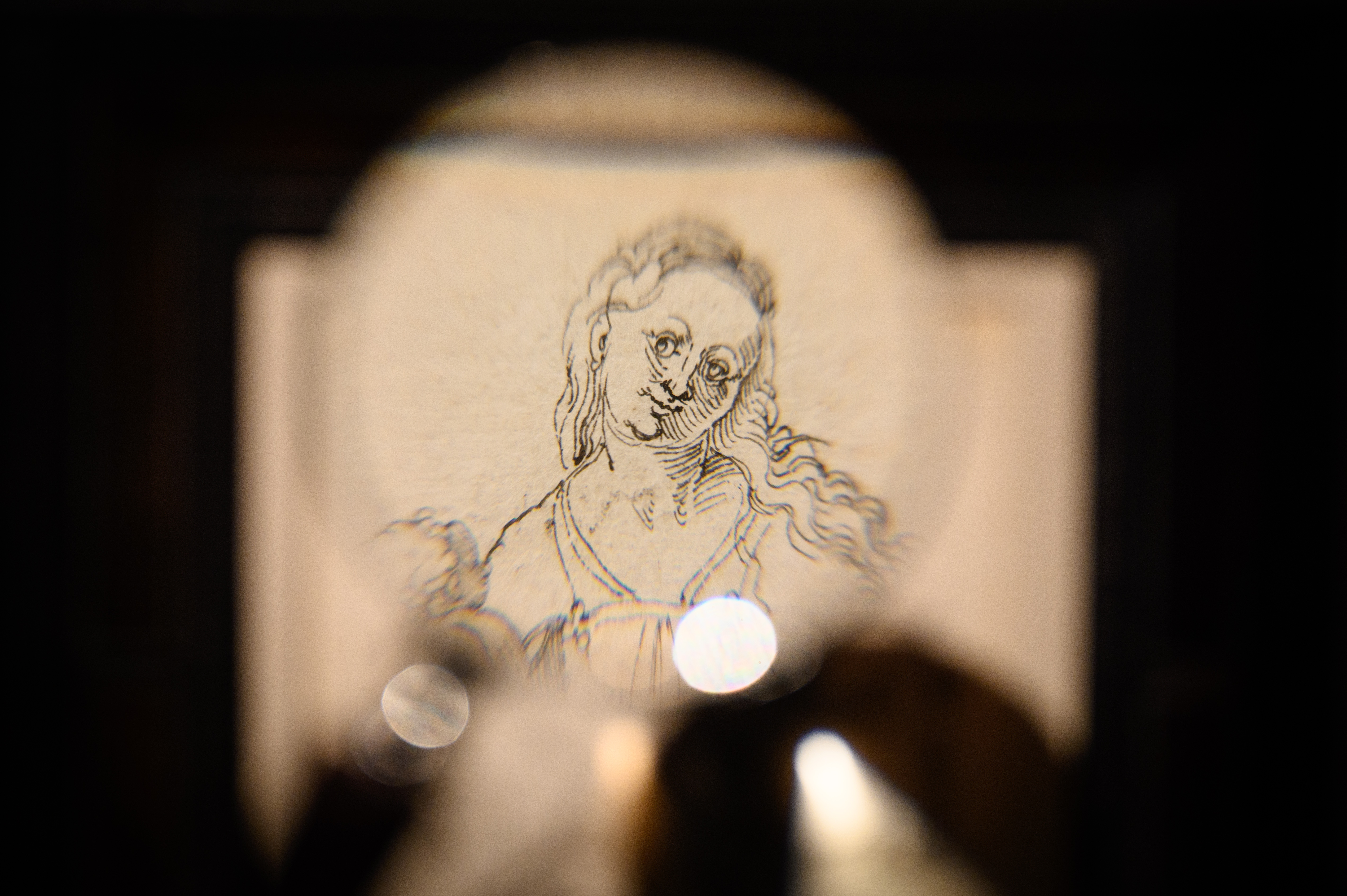
“I was completely speechless,” said Schorer, who has discovered many important works over the years. “I stood stunned for a while, trying to determine if I was looking at the biggest fake I have ever seen – or a masterpiece.”
By the end of the meeting, Schorer said, they had essentially negotiated a deal: Schorer would give the man and his wife a cash advance of $ 100,000, and Schorer would take the design to London, where he is a shareholder in the centuries-old Agnews Gallery. (Citing a confidentiality agreement, Schorer declined to give details of their financial arrangement: “Let’s just say I gave them three completely transparent options and they chose their favorite.”)
Over the next several months, Schorer traveled extensively to consult with specialists in the United States and Europe who analyze inks, study historic nibs, and inspect old property records. He spoke to paper historians and curators, filigree scholars, museum curators, printmakers and art historians specializing in the life and work of the artist, who died in 1528.
The ownership history of the design has been difficult to pin down, but Schorer believes it was at some point transferred to Paris, where in 1919 it entered the Maison Carlhian collection. The work was passed down through family, appearing in archives from the 1950s, and eventually landed in Concord with Jean Paul Carlhian, a well-known Boston architect who designed the Smithsonian Institution’s National Museum of African Art and the Arthur M. Sackler gallery, now part of the National Museum of Asian Art.
A few years after Carlhian’s death in 2012, his family organized a real estate sale, in which the original buyer purchased the design for less than some pay daily to park in downtown Boston. .
But the design’s biggest authentication test came when Schorer brought it to Jane McAusland, a prominent paper conservator in England.
McAusland, who worked on designs for the Queen’s collection at Windsor Castle, quickly identified several red flags with the artwork: this. Equally disturbing, it turned out that someone had artificially aged the paper by applying small spots of coffee or tea.
“Oh my God, that’s a fake,” McAusland recalls. “I was terribly alarmed.”
As she continued to work, however, McAusland’s worries began to dissipate: the original sheet was thin, very strong, and made of pure flax fiber – likely from northern Italy in the late 15th century. century.
“This is good news for Cliff,” she said. “Dürer was in northern Italy at the end of the 15th century, and this drawing is dated 1503.”
Even better news came when McAusland held the paper up to the light, revealing a faint watermark – the revealing trident and ring, found on 235 of Dürer’s drawings.
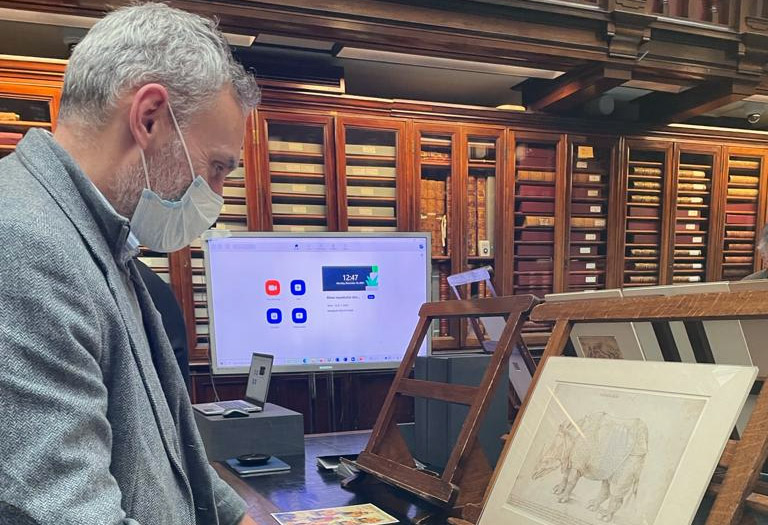
For Albertina’s Metzgers, the watermark is extremely convincing proof.
“This watermark is only documented in Albrecht Dürer’s drawings,” said Metzger, who is working on a catalog raisonné to chronicle all of the artist’s known works. “It was very, very important proof for me that this drawing is from the time. It’s from Dürer’s hand.
Metzger, who has said he plans to include the new drawing in his next collection, has virtually joined more than a dozen international experts at the British Museum this week to discuss the work.
“It was really like a dream,” he said, recalling his first impression of the drawing. “I was completely amazed.”
But at least one art historian isn’t so sure. Fritz Koreny, former curator of the Albertina, said that after inspecting the drawing he was convinced that it was not by Dürer but rather the work of the artist’s most gifted pupil, Hans Baldung, known as Grien, which joined Dürer’s workshop at the beginning of the 16th century.
“It’s a beautiful drawing, but it’s not from Dürer,” said Koreny, who published a book on the artist’s animal and plant studies in the 1980s. “It’s very close to Dürer . It’s done in his workshop.
Koreny declined to elaborate on why he disputes the attribution, saying he plans to publish his own article on the matter. He added that his opinion was based, at least in part, on some 50 years of connoisseur.
“It’s the line,” he said, describing the artist’s technique. “It’s different from Dürer’s.”
Metzger rejected the claim that “The Virgin and Child with a Flower on a Grass Bench” is the work of Dürer’s star student, writing in a subsequent email that the drawing has “nothing to do with Baldung’s early style “.
He added that Dürer made many drawings of the seated Virgin during this time, probably preparatory studies for a larger work that was lost or never made. The newly discovered design fits into this body of work, he said, noting that Dürer saw it “as a work in its own right” when signing his monogram.
If those who support the attribution are correct, the appearance of the drawing would be among the rarest of wonders: most of Dürer’s drawings are in museums, and while Metzger said about 24 are in private collections, it’s been decades a newly discovered drawing by Dürer surfaced on the market.
In the meantime, Schorer is potentially considering a major windfall. The drawing is currently on deposit at the Agnews Gallery in London, which offers it for sale. And although Schorer said any estimate would be “speculative,” he said he believed the artwork could reach a record price for an old master’s drawing.
“The record price currently held is that of Raphael at $ 47.5 million,” he added.
It could also be a heck of a salary for the original buyer of the design, whom rare book dealer Phillipson once described as “a bit poor”, spending his days chasing down area real estate sales and tiny houses in the area. auction in search of neglected treasures.
“He’s more interested in buying cheap stuff,” said Phillipson, who said he repeatedly urged his friend to have the drawing appraised. “I think we’re on to something.”
Malcolm Gay can be reached at [email protected]. Follow him on Twitter at @malcolmgay.
|
Sources 2/ https://www.bostonglobe.com/2021/12/18/arts/drers-hand-global-market/ The mention sources can contact us to remove/changing this article |
[ad_2]