
[ad_1]
Taiwanese youth’s growing confidence in the United States has not translated into trust in President Joe Biden, who is celebrating his first anniversary in office on Thursday.
When Biden takes office on January 20, 2021, he inherits a deeply divided country struggling to contain the COVID-19 pandemic. Not much has changed. As the domestic debate over the successes and failures of his first 12 months continues, attention has turned to Asia — where the focus of U.S. foreign policy is now, administration officials say.
January 12, Taiwan Commonwealth Magazine A survey published documents the overwhelming confidence in the United States among Americans under the age of 40. Those aged 20 to 39 were most likely to prefer a closer alliance with Washington, but there was no age group that preferred Beijing overall.
The survey found that 58.8 percent of respondents across all age groups believed that the U.S. might support Taipei militarily in the event of a conflict in the Taiwan Strait. That number rose to nearly 70 percent in the 20-29 age group and dropped to around 45 percent in the 50-59 age group. Some 54 percent of respondents said the U.S. could defend Taiwan if it chose to intervene, while 38.7 percent said it could not.
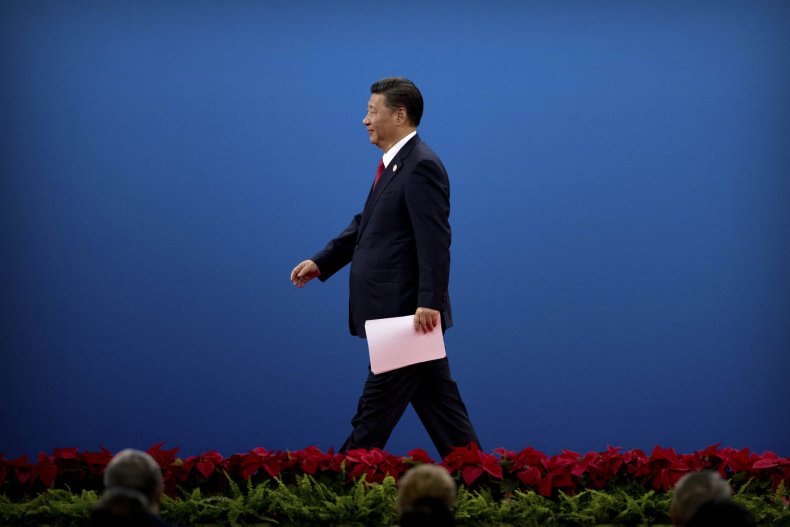
Debates about U.S. military and economic capabilities are taking place on both sides of the Taiwan Strait and on both sides of the Pacific and Atlantic. Observers remain divided on whether the U.S. is retreating. In Beijing, Chinese leader Xi Jinping believes that the East is rising and the West is declining.In Taipei, however, demographic disparities persist in terms of U.S. perceptions
Mark Schiefelbein/Pool/Getty Images
The generation gap may be related to the trend of Taiwanese national identity. The island is still ruled by the Republic of China government, which withdrew from the mainland in 1949, but underwent a transition from a one-party state to a successful democracy in the 1990s. Today, 60% of people consider themselves Taiwanese rather than Chinese. federal opinion polls. Among younger respondents, the figure was closer to 80 percent, while about half of middle-aged respondents still believed both.The more they identify with Taiwan, the more they lean toward the United States
This trend is reflected in the preference for China and the United States. Nearly 47 percent believe Taiwan should maintain equal relations with the U.S. and 31 percent favor closer ties with Washington, while also maintaining peaceful relations with Beijing. Instead, only 6.4% preferred it. In reality, the island has no choice but to oscillate between two rival powers.
Despite heightened tensions across the Taiwan Strait, the poll found that 63.7% of respondents were not concerned about the possibility of war breaking out within a year, compared with 35.3%. When asked whether China would resort to force to seek “unification” between Taiwan and the mainland, 57.9 percent said no, while 35.7 percent said they would. Likewise, optimism about the country’s future was more pronounced among younger respondents.
China’s crackdown on democracy in Hong Kong, economic coercion against Taipei, expansionist tendencies in the surrounding waters, and Xi’s personal ambitions to conquer Taiwan have all contributed to a growing distrust of Beijing. However, despite the island’s positive attitude toward the United States, that sentiment has not translated into trust in its president.
Mandel NGAN/AFP for Getty Images
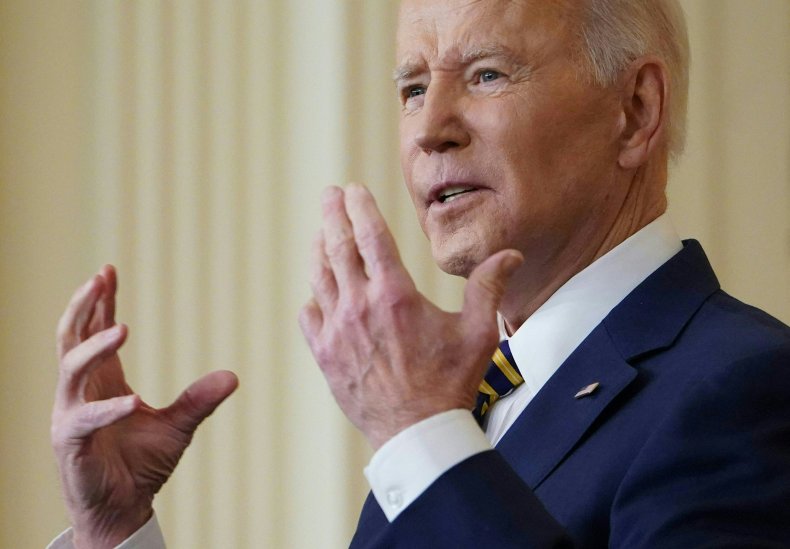
No less than 57.7% of respondents said federal They don’t trust Biden, compared with 33.7%. His polls are about 18 percentage points higher than China’s Xi Jinping, with 76.4 percent of Taiwanese distrusting him, compared with 14.3 percent who do. It was a harsh sentence for a US president who raised US-Taiwan relations to an all-time high.
In his first year in office, Biden has maintained the hard line on China taken by his predecessor, Donald Trump. But his administration has also redefined the flashpoint in the Taiwan Strait from a regional concern to an international one, drawing at least nominal support from U.S. allies in Europe and Asia. Meanwhile, with U.S. support, Taipei has expanded unofficial ties with new friends in Central and Eastern Europe — Russia’s former stronghold, where China saw a shortcut to Brussels.
Taiwan responded positively to the Biden administration’s supportive statement on the international stage, as well as its donation of millions of vaccine doses last summer at the height of the local COVID-19 outbreak. Just last month, Taiwan held a referendum and opted to keep its market open to U.S. pork despite concerns about added ractopamine — presumably a reflection of the island’s ability to build a stronger economy with its staunchest international backers Hope for contact.
Older generations in Taiwan remember how Washington switched diplomatic allegiance from Taipei to Beijing in 1979. They recalled a few years ago when the United States failed to prevent the United Nations from expelling Taiwan from Taiwan in support of China. In the same decade, the region saw U.S. troops leave Vietnam, an event that sparked the first heated debates about U.S. decline before the end of the Cold War, turning those discussions upside down.
Young Taiwanese are often reminded of America’s fragility. Ordinary Americans’ distrust of democratic institutions is one of the most popular topics in China, along with the uncertainty that the U.S. might give up when it pulled out of Afghanistan last summer. Today, Taiwan may look at Ukraine’s security and see parallels with itself. However, the younger generation remains bullish on their option to support the U.S. — hoping that the U.S. will support them in return.
federalThe telephone survey of 1,070 citizens over the age of 20 in Taiwan was conducted between December 2 and 7, 2021.
|
Sources 2/ https://www.newsweek.com/taiwan-has-faith-us-does-not-trust-president-joe-biden-poll-1671092 The mention sources can contact us to remove/changing this article |
[ad_2]