
[ad_1]
Uganda’s most recent Ebola outbreak should be a wake-up call to the world. Last October, just 3 weeks into the outbreak, the disease spread to Kampala, a well-connected city of 1.5 million people. From there, he could have easily entered other countries.
As Incident Manager in Uganda’s Ministry of Health, I coordinated all technical and operational aspects of the Ebola response. We worked tirelessly to limit the spread and declared an end to the outbreak on January 11. But the quarantines and shutdowns have come at a high cost, especially for the country’s poorest people.
We need a better way. The world has not relied solely on lockdowns, quarantines and contact tracing to fight COVID-19. When rich countries are hit by a deadly infectious disease, there is a massive global effort to develop vaccines and therapies.

Vaccine incentives do not backfire on policymakers
Preventive, not reactive, vaccination is necessary to fight Ebola. Wealthier nations must urgently fund mapping efforts and vaccine production to protect vulnerable populations in sub-Saharan Africa and, through them, the rest of the world.
Ebola outbreaks have occurred almost every year since 2000 in Central and West Africa. Their frequency is likely to increase. With habitat destruction as well as heat, drought and other extreme weather caused by the climate crisis, animals carrying the virus will migrate, coming into more contact with humans.
Since the first Ebola outbreaks in 1976, control has relied on the same tools: contact tracing, quarantine of confirmed cases, safe and dignified burials, and lockdowns. These measures work best in sparsely populated countryside and are not viable on their own in dense and complex urban environments.
I was distraught when Ebola hit Kampala. I had been in Freetown, the capital of Sierra Leone, during the Ebola crisis in West Africa in 201416. Relying on contact tracing and quarantine failed us there, transmission went away. continued for several months. I was afraid it would start again.
Institutional quarantine, meaning separating people who have been exposed to Ebola from their families in an isolation center for 21 days, or even just quarantining them at home, can be difficult enough for those who have relatives to care for or who need these 21 days of confinement. income to feed their families. But the measures we were forced to take in Kampala included 63 days of lockdown in two rural districts with a combined population of nearly one million.
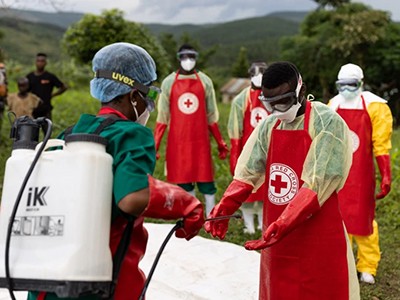
Can mRNA vaccines transform the fight against Ebola?
The effect on people’s livelihoods and the local timber industry has been devastating. The societal disruption these interventions cause fuel people’s anger and distrust of public health efforts. And they are not the only way to curb the spread of the disease.
Ebola is localized in a band across central and western Africa. High-risk regions include areas in Uganda, Democratic Republic of Congo, Gabon, Sierra Leone, Liberia, South Sudan, Ivory Coast and Ghana. Some areas of these countries show signs of Ebola transmission or are close to the habitats of animals that could be reservoirs of Ebola, such as fruit bats. Researchers could map the populations of these countries most at risk and target them for vaccination, thus preventing future epidemics.
The mapping would combine three techniques: testing human blood samples for Ebola, testing blood samples from domestic and wild animals, and modeling the disease. For human blood samples, there is an easy and inexpensive way to start: testing stored samples from national HIV surveys, which many of these countries already have. For example, Uganda has HIV serology survey 200405. We could use the results of testing these samples for Ebola to target specific geographic areas for further surveys. But African nations will need support: funding for reagents and expertise in serosurvey design and disease modeling.
Next, we need enough Zaire-strain Ebola vaccine to vaccinate entire populations in targeted areas. In places that have experienced Ebola outbreaks, vaccine acceptance is high. Areas that have not experienced an outbreak will be a bigger challenge, and we need to invest in appropriate communication and culturally sensitive ways to engage with communities to gain their trust.
A full picture of the longevity of vaccine-induced immunity is unknown for Ebola, but the existing evidence is relatively encouraging (ZA Bornholdt and SB Bradfute Lancet infected. Say. 18, 699700; 2018). Antibody levels in the blood decline over a period of six months to a year, but the duration of T-cell immunity is unknown. More data is needed, but an annual vaccine might be plausible.
Although there are approved vaccines for the Zaire strain of Ebola, this latest outbreak was caused by the Sudanese strain. Full preventive vaccination would require Sudanese-strain vaccines, so global institutions must funnel money to entities that develop and test such vaccines. More than 5,000 doses of trial vaccines arrived in Uganda just as the outbreak was winding down, and planned clinical trials need to be redesigned to generate more data on safety and efficacy.
Ebola is not going anywhere. The wisest use of this time between outbreaks is to map high-risk areas and vaccinate those in them, instead of waiting for another outbreak. The global community has the opportunity to get it right and protect the world.
Competing interests
The author declares no competing interests.
|
Sources 2/ https://www.nature.com/articles/d41586-023-00184-0 The mention sources can contact us to remove/changing this article |
[ad_2]