
[ad_1]
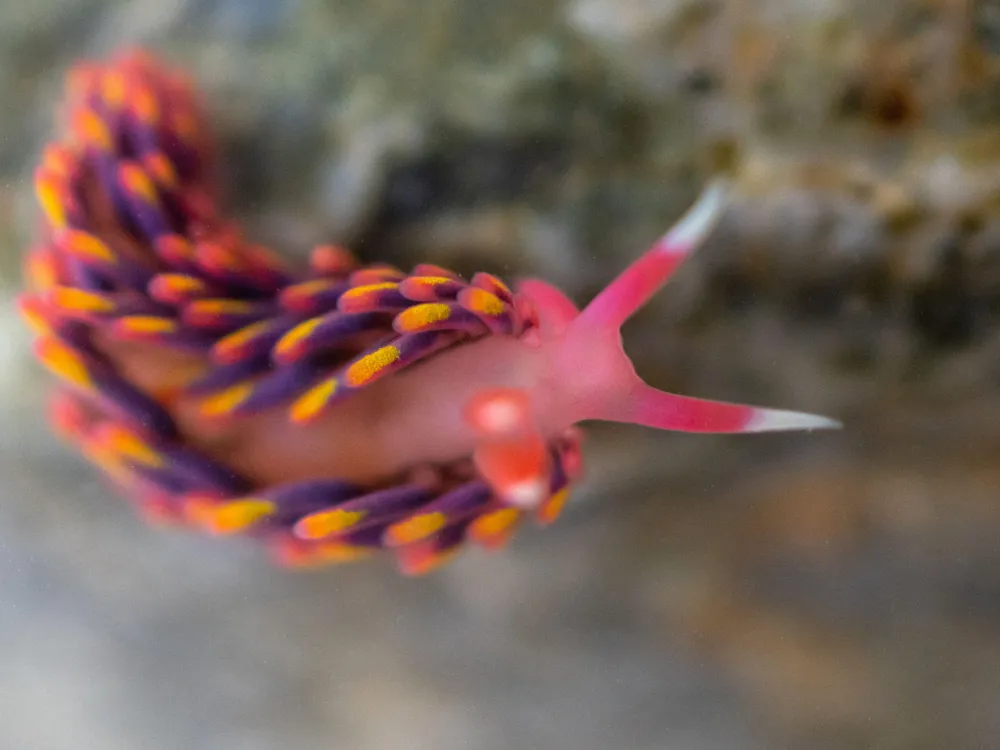
This is the first documented rainbow sea slug in a rock pool in the UK.
Vicky Barlow / Alamy Stock Photo
Vicky Barlow was tossing rocks into a rock pool in Falmouth, England, looking for spider crabs, when something extremely bright and unusual caught her eye, she wrote in a blog post. Under a large rock covered in algae, she made a very rare find: a rainbow sea slug.
I knew exactly what it was as soon as I lifted the rock and let out a little cry of excitement, Barlow, a volunteer with environmental education nonprofit The Rock Pool Project, writes in a Instagram post.
She placed the sea slug in a pot to better see its vivid hues of pink, red, purple and orange. The critter unfolded and revealed itself in full technicolor, she writes, then reared up to survey its surroundings. Other slug enthusiasts rushed to watch the animal explore the jar and take pictures before Barlow put it back where it came from.
Rainbow sea slugs are very rare in England, usually found in warmer waters, such as those along the west coasts of Spain, Portugal and France. In fact, there have only been three documented sightings of the species in the UK, writes BBC News Jonathan Morris. But these have all been spotted by divers and snorkelers, with the First of all sighted off the Isles of Scilly in 2022.
As far as we know, this is the first time this species has been discovered by a rock pooler in the UK, said marine biologist Ben Holt, CEO of the Rock Pool Project. GuardiansSteven Morris. It’s kind of hot water but it looks like it got here. He adds that members of the organizations have witnessed striking changes due to climate change.
Waters around the UK have experienced rapid warming due to the climate emergency. Earlier this year, a report from the National Oceanography Center found that sea surface temperatures around the UK have risen by around0.3 degrees Celsius (0.54 degrees Fahrenheit) per decade over the past 40 years. He also predicted that by the end of the century the water temperature in the UK will rise by more than 3 degrees Celsius (5.4 degrees Fahrenheit).
Sea slugs, the common name for a group of sea creatures called nudibranchs, are particularly useful for tracking the impacts of climate change. Most nudibranchs only live for about a year, which means their populations react very quickly to environmental changes, Marthe de Ferrer reported for euro news in 2021. In Australia, citizen scientists collected data on sea slugs for a decade to monitor the species and learn about changes in their distribution, including their expansion into historically colder waters. One of California’s nudibranch species, meanwhile, has extended its range to the north about 130 miles since the 1970s.
Around 3,000 species of nudibranchs exist in waters from the poles to the tropics. These soft-bodied snails feed on algae, anemones and other sea slugs. Unlike other snails, adult nudibranchs have no shells to protect them from being eaten by hungry marine animals, they reject them in the form of larvae. Instead, many nudibranchs have developed bright colors to scare off predators such as sea turtles, starfish, and crabs. Some species of the group Aeolididacan even have the unusual ability to steal stinging cells prey that they ingest and shoot them when threatened.
It’s absolutely amazing what you can find on our rocky shores, Barlow writes in the blog. Today was a perfect example of the incredible wildlife we have on our doorstep here in Cornwall.
Recommended Videos
|
Sources 2/ https://www.smithsonianmag.com/smart-news/rare-technicolor-rainbow-sea-slug-found-in-england-180982218/ The mention sources can contact us to remove/changing this article |
[ad_2]