
[ad_1]
CNN
—
A part of the brain linked to memory has shrunk in people with severe sleep-disordered breathing – which can include heavy snoring and sleep apnea – according to a new study. People with sleep apnea stop breathing for 10 or more seconds at a time several times a night.
“It is increasingly recognized that this sleep disorder, if left untreated, will increase the risk of dementia. Here, we provide original new evidence focused on the medial temporal lobe, a region of the brain affected early by Alzheimer’s disease,” said study lead author Géraldine Rauchs, postdoctoral research fellow at the National Institute of Health and Medical Research in Caen, France, in an email.
The medial temporal lobe is an area of the brain essential for memory and recall of facts and events. Buried deep within this area is the hippocampus, a complex structure essential for learning, memory encoding and consolidation, and spatial navigation.
However, the loss of volume in the brain only occurred when a person also had signs of beta-amyloid plaques, a hallmark sign of Alzheimer’s disease, according to the study.
“We found that greater sleep apnea severity was associated with lower volumes in the hippocampus and various subregions of the medial temporal lobe,” Rauchs said. “People who didn’t have amyloid plaques didn’t have this lower brain volume, even though they had severe sleep apnea.”
Amyloid buildup in the brain can begin decades before any clinical signs of cognitive decline – as early as the 30s and 40s, experts say. After age 70, a third of cognitively normal people have amyloid in their brain tissue, according to a February 2022 study. Interestingly, the deposits do not necessarily lead to Alzheimer’s disease – many older people have evidence of extensive amyloid in their brains and do not develop Alzheimer’s disease.
However, it is during sleep, particularly deep slow-wave sleep, that the brain clears much of the amyloid buildup in the brain, Rudy Tanzi said, a professor of neurology at Harvard Medical School in Boston, who was not involved in the study.
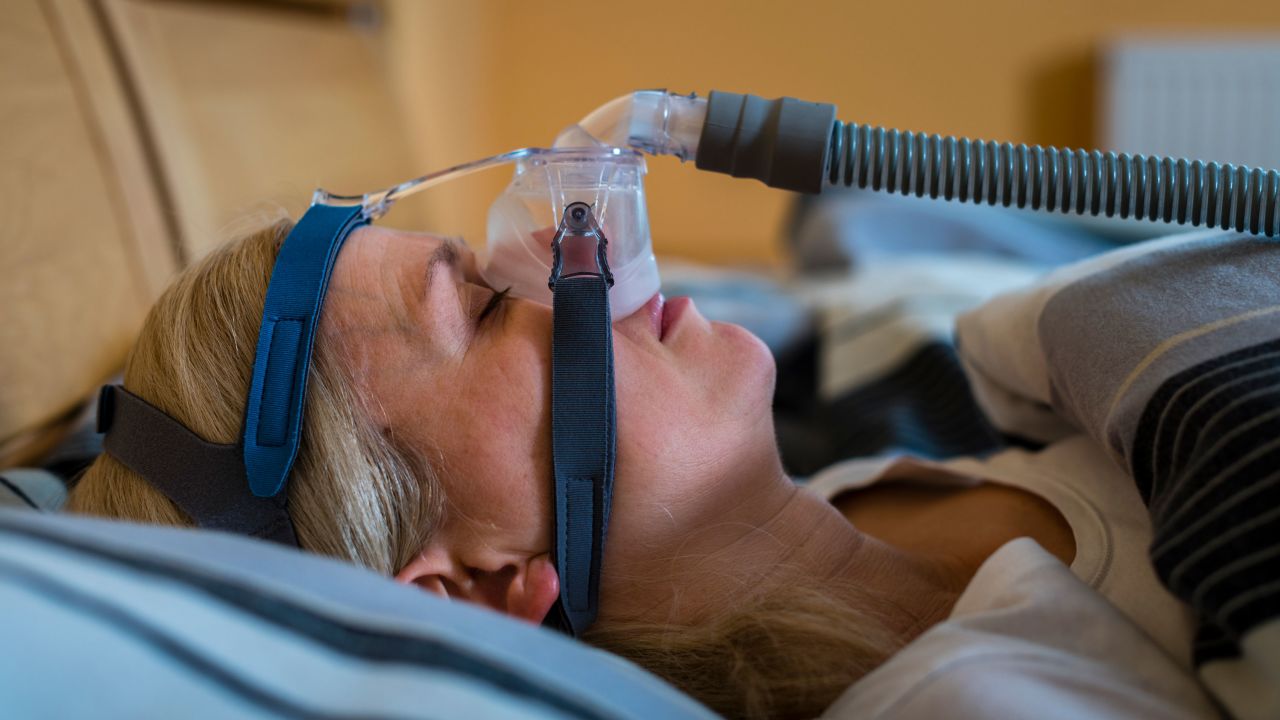
In order to get enough deep sleep for the brain to regenerate, adults need at least seven hours of uninterrupted sleep. However, people who snore heavily or suffer from sleep apnea can experience hundreds of mini-awakenings per night, even if they don’t realize it.
“It makes sense that sleep apnea is associated with reduced brain volume in older adults, particularly those with amyloid plaque,” Tanzi said in an email.
“If the amyloid is not properly removed, it will trigger the cascade of Alzheimer’s disease pathology eventually leading to dementia,” said Tanzi, who is also director of the Genetics and Research Unit. aging at Massachusetts General Hospital in Boston.
The study, published Wednesday in the journal Neurology, looked at data collected from 128 people over the age of 65 participating in aging well, an ongoing randomized clinical trial in Caen, France. The trial is designed to test interventions on cognitive aging.
All participants were free of any cognitive, psychiatric or chronic disease at the start of the study. None had sleep apnea at the start of the study, and those who developed sleep-disordered breathing and were treated with continuous positive airway pressure, also known as CPAP, were excluded from the results of the study. study.
The study group underwent brain scans, memory tests that were repeated at around 21 months, and a nighttime sleep study performed at their home. Sleep tests showed that 91 of the 122 study participants suffered from moderate to severe sleep apnea, but most did not have many obvious symptoms – only 11 people suffered from excessive daytime sleepiness.
Twenty-six of the participants had amyloid plaques in their brain tissue. In these people, severe sleep-disordered breathing was linked to decreased volume in the medial temporal lobe. The more severe the apnea, the greater the volume loss, according to the study.
Additionally, “Lower volumes in certain regions of the medial temporal lobe were associated with poorer memory performance assessed 18 months later,” Rauchs said.
However, no shrinkage was found in the brains of people with sleep apnea who did not have amyloid plaques. This finding suggests that some people may be more vulnerable to the adverse effects of sleep disorders that affect breathing and interrupt sleep, Rauchs said.
“People who are in the very early stages of the Alzheimer’s disease continuum have shown specific vulnerability to sleep apnea,” Rauchs said. “Further studies should examine whether treating sleep-disordered breathing could potentially improve cognition and prevent or delay neurodegeneration.”
Sleep apnea and the brain
An estimated 936 million adults global between the ages of 30 and 69 can suffer from sleep apnea, with many more undiagnosed. If sleep apnea is severe and untreated, people have three times the risk of dying from any cause, according to research.
A study published in May found people with severe Sleep Apnea who spent less time in deep slow-wave sleep had more brain white matter damage than people who had more slow-wave sleep. For every 10% decrease in time spent in deep sleep, there was an increase in white matter hyperintensities (damage) in the brain similar to the effect of being 2.3 years older, according to the study.
Severe sleep apnea was associated with disturbing changes in the brains of middle-aged and older adults, a July 2018 study find. People who had low blood oxygen levels because of sleep apnea were more likely to have thinner brain matter in certain regions linked to dementia, the study found.
When tested, these people had less ability to remember and recall new information. At the same time, they were more likely to have thickness in other areas of the brain, which the researchers said could be signs of swelling and inflammation.
Rauchs said in an earlier study she found that amyloid load in the brain was “predicted by the severity of hypoxia associated with sleep apnea. Hypoxia is a lack of oxygen to the brain that occurs in sleep apnea when a person stops breathing several times per hour.
“We hypothesize that hypoxia may also have a deleterious effect on the volume of medial temporal lobe regions. Indeed, some medial temporal lobe regions such as the hippocampus are particularly vulnerable to hypoxia,” he said. she stated.
Studies like these reinforce the need to be evaluated by a sleep specialist and treated for sleep apnea. Work with a doctor “to keep your brain healthy and free of amyloid deposits that set off the cascade of Alzheimer’s disease ultimately leading to nerve cell loss and cognitive decline,” Tanzi said.
|
Sources 2/ https://www.cnn.com/2023/05/31/health/sleep-apnea-snoring-brain-volume-wellness/index.html The mention sources can contact us to remove/changing this article |
[ad_2]