
[ad_1]
Often when we talk about consumption of carbohydrates, we believe that reducing its intake to a minimum and shrinking its volume on our plate is enough to control calories, blood sugar and body weight. But stopping carbohydrates altogether in a body that is genetically and culturally prone to eating them as the bulk of a meal means that stopping carbohydrate intake won’t serve the purpose; it will only build denial and craving. Any diet should be sustainable and, therefore, it is important that a healthy and well-balanced diet should be a combination of healthy fats, protein, fibre and even carbohydrates. And the last is just not about managing the quantity. It is about how, why, what and when to eat your carbohydrates.
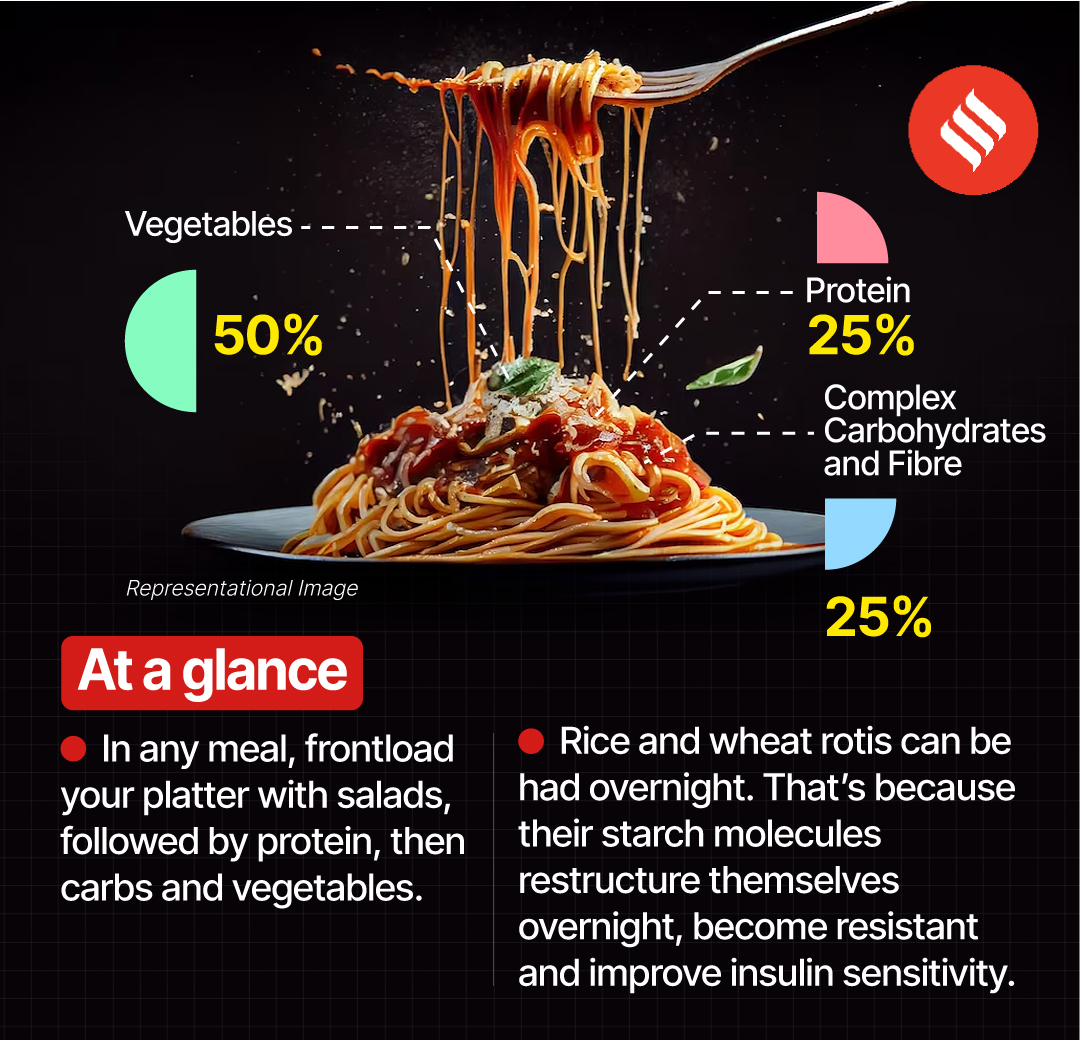 Eat right and eat at the right time (Designed by Abhishek Mitra)
Nowhere is this more evident than the new guidelines by the World Health Organisation (WHO) on carbohydrates, which has shifted the pivot of conversation to where the carbohydrates are coming from. “We’re more specific about where the [nutrients] are coming from. We’re more specifically interested in fibres that have more complex carbohydrates. We’re looking at dietary fibre primarily from whole grains, fruits and vegetables, which we know have a protective cardiovascular effect,” its officials said.

UNDERSTANDING COMPLEX CARBS
So what are complex carbs? These are made up of polysaccharides, which are longer, intricate chains of sugar molecules and comprise both starches and dietary fibre. Starches are usually stored carbohydrates in peas, beans, grains and vegetables and are a source of quick energy. Fibre, the kind found in legumes, seeds, nuts, fruits and vegetables, is good for gut health. Both have a longer satiety index, prevent hunger pangs, thereby reducing food intake, delay digestion and slow down post-meal blood sugar spikes.
So how much carbohydrates should we apportion for a meal?
I would say 25 per cent of your food pie should be complex carbohydrates. Which means junk refined carbohydrates and go for fibres and complex starch in the form of whole wheat, brown rice and millets. The other big diet tweak that helps in controlling blood sugar is to count potato as part of the body’s total carbohydrate intake and not be seen as a vegetable. In fact, once you put potatoes in the carbohydrate section, you should automatically cut down on the quantum of roti or rice. The next 25 per cent of your daily plate should be lean protein: pulses, legumes, low fat milk, curd, lean chicken and fish. About 50 per cent of your plate should be vegetables.
How should carbohydrates be had?
Start eating any meal platter with protein and fibre first. This could take the form of fruit and vegetable salads with tofu and sprouts. For example, start your breakfast with egg whites (if you are trying to lose weight)/eggs and then have some boiled vegetables, team them up with avocado and then have a toasted bread made of millet, quinoa or sourdough. Add vegetables to hung curd. You may even include dalia or broken wheat with soya granules.
Mid-meals should be high in protein, so that you are not too hungry for lunch. Our normal tendency is to have biscuits and cookies, which are made of refined wheat, but they end up making us hungrier. Nuts are a good option. Toss peanuts into puffed or flattened rice or maybe have a fistful of almonds, walnuts and pista. This pre-meal load prevents overeating and suppresses the release of sugar. Having a soluble fibre like isabgol, ragi and husk in a glass of water before lunch also has a similar effect.
For lunch, begin with salads that include soaked chana dal (chickpea), moong dal (grams) and tofu apart from diced vegetables, making for a good protein-fibre mix. Then have your roti with vegetables, lean meat, chicken, fish and cottage cheese. Make sure the roti is made with added bran and husk to increase the fibre quotient. Try making rotis out of the flour of chickpeas, soya, quinoa, amaranth, buckwheat and foxtail millets (all of which are rich in protein) so that the glycemic index (the value used to measure how much specific foods increase blood sugar levels) of the roti comes down. Do not end with fruit. That’s the common mistake we make, treating fruit like a dessert when we should be using it as a mid-meal snack. The same pattern can be repeated for dinner with minor variations here and there. You can add curd and dal but lower your carbohydrate count further and make sure you wait at least two hours before sleeping. After 10 to 15 minutes of your food settling, take a short stroll inside the house itself. All of this lowers the release of sugar from the food.
HOW TO COOK CARBS
Contrary to what our taste buds tell us, pasta should ideally be not had hot, soft and without vegetables as the sugar rush is quicker. When you cook pasta al dente and have it cold, the sugar spikes are far lower. The best is if rice and wheat rotis can be had overnight. That’s because starch molecules restructure themselves overnight and become resistant. Called resistant starch, it is a type of carbohydrate that doesn’t get digested in your small intestine. Instead, it ferments in your large intestine and feeds “good” gut bacteria. The body starts reacting to resistant starch as fibre, creating milder sugar peaks. That’s why stale roti and rice, even though they become cold foods, do not cause sugar spikes. This way you also end up absorbing fewer calories.
Finally, eat right and eat at the right time. Keep it real, which means individualise your diet according to your activity, age and schedules. Also, our bodies respond to food differently, so it’s important to consult your diabetes educator to understand what foods your body needs, how much you should have, what nutrient value is preserved through what form of cooking and so on.
|
Sources 2/ https://indianexpress.com/article/health-wellness/day-old-pasta-rotis-control-blood-sugar-better-cook-eat-carbs-8868741/ The mention sources can contact us to remove/changing this article |
[ad_2]