
[ad_1]
This is an excerpt from Second Opinion, an analysis of health and medical science news emailed to subscribers weekly. If you are not a subscriber, you can do so by clicking onhere.
After an unprecedented global outbreak of mpox grabbed headlines last summer, prompting widespread awareness campaigns and vaccination efforts, the virus seemed to be disappearing.
Cases dropped. Media coverage has dried up.
Just like the interest in vaccines.
In Toronto, one of the main cities affected during Canada’s months-long outbreak, public health data shows that only 15% of people who received a first dose have since completed the full series of vaccines.
Then, in January, a warning shot in this same city: Four cases of the painful disease formerly known as monkeypox were reported in just one 24 hour duration. Toronto Public Health later told CBC News that all recent cases were “locally acquired” rather than linked to overseas travel.
A forgotten virus, maybe but not gone.
“There is still some transmission going on,” said Dr. Zain Chagla, an infectious disease specialist and associate professor at McMaster University. “Unfortunately, I think we’re probably going to deal with that in the near term future, and probably even for a while.”
It is therefore not surprising that the World Health Organization (WHO) called this week to maintain mpox as a public health emergency of international concern and then noted the number of new cases reported worldwide increased by 70% compared to the previous week.
The cluster of cases in Canada is a reminder that the virus is still out there, circulating to some degree. The situation elsewhere is worse. And the concern going forward is that this virus will continue to appear in new populations, hitting vulnerable people while decreasing vaccination rates.
“We can’t be lulled into this sense of comfort,” said mpox researcher Jason Kindrachuk, a microbiologist at the University of Manitoba and Canada Research Chair in Emerging Viruses.
“Yes, we have contained things but we have to understand that the virus has not gone away.”

‘Who knows’ what summer will bring
The latest WHO report showed that the number of reported cases has been steadily declining globally, but more than 30 countries continue to report new infections. Deaths also continue to rise, including at least two in the United States so far this month.
“Even for the countries [like the U.S.] who have declared, essentially, victory, it is important to remain vigilant,” said Dr. Boghuma Titanji, a medical researcher at Emory University in Atlanta. “The cases are not at zero, so who knows what the summer will bring.
Travel abroad in the coming months remains a concern for Dane Griffiths, director of the Ontario agency Gay Men’s Sexual Health Alliancegiven the ongoing epidemics abroad.
The biggest increase in confirmed cases is in Mexico, with about 60 new infections since early February and more than 3,800 in total in a country that has not deployed any mpox vaccine.
“Mexico doesn’t have access to the vaccine and has a higher burden of infections. People should know that, they should understand the local outbreaks where they’re going,” Griffiths said.
WATCH | What is it to recover from mpox:

A Toronto resident shares his monkeypox recovery experience, while officials and advocates say more support is needed for patients during the long weeks of isolation.
The number of cases worldwide is almost certainly an undercount, given the limited surveillance in many parts of the world. Global efforts to track mpox have slowed, the WHO warned in a recent report, and “the true burden of mpox remains unknown in most African countries.”
Canada’s first-ever mpox outbreak exploded last summer, and there have been nearly 1,500 known cases since then, mostly among men who have sex with men, a group extremely affected by the virus, who spreads rapidly through sexual networks.
WHO is also calling on countries to work to eliminate the virus interrupting chains of transmission and containing any outbreak as much as possible.
This is no small feat, given the global reach of the virus and the countless number of animal hosts capable of silently harboring the virus. But it’s a goal that seems vital given the debilitating pain some people experience with an active infection and the risk of death in those most vulnerable to serious illness, including those with compromised immune systems.
A new study outside Belgium, published Thursday in Eurosurveillancealso noted the potential for lingering symptoms, even weeks after an infection.
“Most importantly, clinicians should be aware of the pain, scarring, and mental health issues that may persist after seemingly self-limiting illness,” the authors wrote.
Vaccine access and uptake remain a concern
Along with access to diagnostics and treatment, immunization programs remain a key piece of the puzzle to tackle mpox in the future, WHO said.
But many countries, including those in Africa, still do not have access. And even in cities around the world that saw major outbreaks last summer and provided an abundance of snaps like Toronto and New York absorption of second doses fell off a cliff.
“The coverage for the second doses was significantly lower than we would have liked,” said Griffiths, in Ontario. “I think the sense of urgency is partly changing for people, which makes sense. We’ve been through a few months of little or no reporting.”

It’s also unclear how long immunity lasts after one or two rounds of Jynneos mpox hits.
Smallpox vaccines, which provided some cross-protection against mpox, definitely declined over time, which may have left more people vulnerable to mpox in the first place especially since vaccines have not been widely used in Canada, or many other countries, for several decades.
And, like other vaccines, mpox injections are not 100% effective.
“There will always be watershed cases that we can’t let anyone have some sort of false assurance that ‘Oh you’re vaccinated, you’re all good’ because they can still get the infection,” warned Dr Rosamund Lewis , the WHO Technical Lead for mpox, in a call with CBC News.
More infections in women
As vaccination efforts continue, the WHO has highlighted that globally, community transmission of mpox continues to occur, particularly among “vulnerable populations of gay and bisexual men and other men with sex with men”.
People living with HIV account for about half of all cases and are also at risk for more serious illnesses.
Yet as the global epidemic soared, eventually reaching over 85,000 known cases and over 90 deaths in 110 countries, there was also an increase in the proportion of cases in women and children showing the ability to this virus to strike wider networks of individuals, when given the opportunity.
Data shows the proportion of women infected worldwide remains below 10%, but has doubled during the outbreak, Lewis said.
This could be due to wider transmission in African countries where the virus has circulated longer, she suggested, or may be a reflection of more infected trans or non-binary women.
WATCH | Mpox cases increased in Canada in 2022:
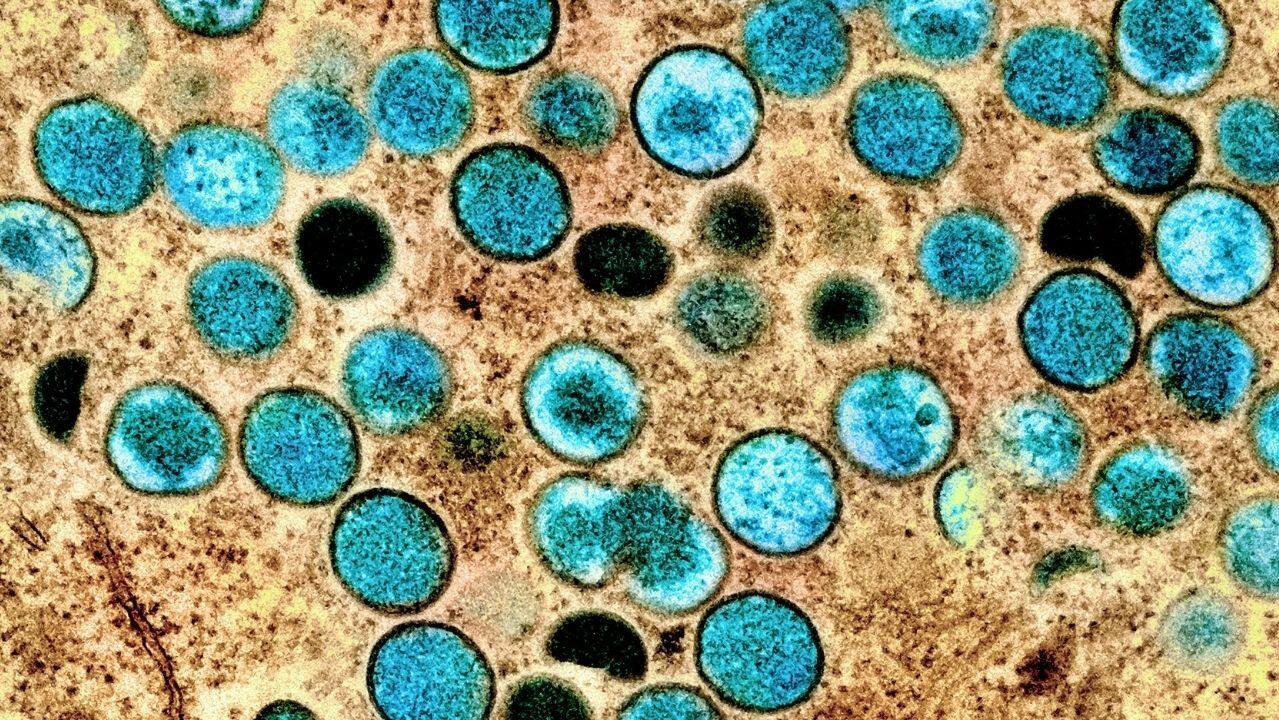
As cases of monkeypox rise in Canada, there are growing concerns that the vaccine may not be widely available and time is running out to contain the spread.
Canadian data shows that the bulk of mpox infections so far have been in adults, mostly 18-49 year olds, but there have also been a handful of cases in children and adolescents.
The virus has spread widely around the world through sexual contact, but it has long been known that mpox can also transit in other settings, through close skin-to-skin contact in households or by touching contaminated fabrics or surfaces.
A case study of a tattoo parlor in Spain, published in January in the New England Journal of Medicineshowed that over a period of time, 36% of customers, most of whom were women, became infected, while nearly all piercing and tattoo items tested came back positive for the virus.
While concerning, these types of situations are “often dead-end events” where there is no transmission in the wider community, Chagla pointed out.
Still, it’s “not a space we can ignore,” Lewis said, “because the fraction has increased.”

Researchers on the lookout for adaptations
Tracking the continued evolution of this virus and monitoring the adaptations that make it capable of triggering ongoing epidemics in humans, scientists say, is also essential.
Researchers from the US National Institutes of Health recently developed a mouse model to study the virulence of mpox. To their surprise, the Clade IIb virus, the strain causing the global outbreak, was much less severe than historical clades of this virus.
The findings, the researchers say, suggest the virus is evolving to become less severe or adapting to better infect other species.
Titanji said no modeling study is a perfect representation of what happens in the real world, although this one aligns with evidence already showing Clade IIb to be a less virulent strain.
“The more it circulates in humans,” she added, “there is a real possibility that it becomes better adapted to pass from human to human.”
The good news? The world has the tools to suppress transmission whenever cases arise, from vaccines to therapeutics if we act quickly and use them.
“Relapses are unfortunately common with a number of different infectious disease outbreaks,” Kindrachuk said.
“But we have at least some control over the extent of what those surges will look like.”
|
Sources 2/ https://www.cbc.ca/news/health/mpox-remains-a-global-emergency-and-cluster-of-cases-in-canada-offers-reminder-it-s-still-circulating-1.6752428 The mention sources can contact us to remove/changing this article |
[ad_2]